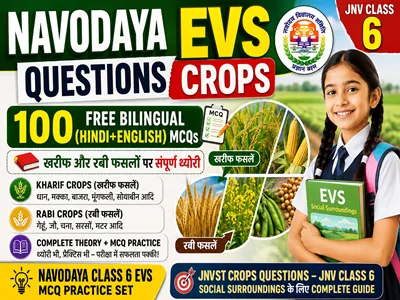
Navodaya Evs Questions Crops – 100 Best Free Bilingual MCQs
JNVST Crops Questions – JNVST Class 6 2027 ke EVS Section (JNV Class 6 Social Surroundings Questions) ke liye theory aur 100 practice questions, Hindi aur English dono me — bilkul free, JNV Classes par.
📚 Covers: Navodaya Evs Questions Crops · Navodaya Class 6 EVS MCQ · JNVST Crops Questions · Navodaya EVS Practice Set 2027 · JNV Class 6 Social Surroundings Questions
📅 Last Updated: 7 August 2026
Navodaya Evs Questions Crops – Complete Theory
🇮🇳 हिंदी में
फसल (Crop) वह पौधा है जिसे किसान बड़े पैमाने पर खेतों में उगाते हैं, जैसे गेहूँ, चावल, कपास आदि। भारत में फसलों को मुख्य रूप से दो प्रकार में बाँटा जाता है — खरीफ फसलें (Kharif Crops), जो बरसात के मौसम में बोई जाती हैं (जून-जुलाई) और सर्दियों की शुरुआत में काटी जाती हैं, जैसे चावल, मक्का, कपास; और रबी फसलें (Rabi Crops), जो सर्दियों में बोई जाती हैं (अक्टूबर-नवंबर) और गर्मी की शुरुआत में काटी जाती हैं, जैसे गेहूँ, चना, सरसों। फसल उगाने के चरण: जुताई → बुवाई → सिंचाई → निराई-गुड़ाई → कटाई। यही Navodaya Evs Questions Crops topic ka core concept है, jo JNVST Class 6 2027 ke exam me poocha jata hai।
🇬🇧 In English
A Crop is a plant grown by farmers on a large scale in fields, like wheat, rice, cotton, etc. In India, crops are mainly divided into two types: Kharif Crops, sown during the monsoon season (June-July) and harvested at the start of winter, like Rice, Maize, Cotton; and Rabi Crops, sown in winter (October-November) and harvested at the start of summer, like Wheat, Gram, Mustard. Steps of growing crops: Ploughing → Sowing → Irrigation → Weeding → Harvesting. This theory forms the base of Navodaya Class 6 EVS MCQ preparation for the Crops chapter.
Kharif vs Rabi vs Cash Crops – JNVST Crops Questions
🌧️ खरीफ फसल / Kharif Crop
बरसात में बोई जाती है (जून-जुलाई) — चावल, मक्का, कपास। / Sown in monsoon (June-July) — rice, maize, cotton.
❄️ रबी फसल / Rabi Crop
सर्दियों में बोई जाती है (अक्टूबर-नवंबर) — गेहूँ, चना, सरसों। / Sown in winter (October-November) — wheat, gram, mustard.
💰 नकदी फसल / Cash Crop
बाज़ार में बेचने के लिए उगाई जाती है — कपास, गन्ना, तंबाकू। / Grown for selling in the market — cotton, sugarcane, tobacco.
🚜 जुताई / Ploughing
खेत तैयार करने के लिए ट्रैक्टर या बैल से मिट्टी जोतना। / Preparing the field by ploughing soil with a tractor or ox.
🏪 मंडी / Mandi (Market)
किसान अपनी फसल बेचने के लिए मंडी जाते हैं। / Farmers go to the mandi to sell their harvested crop.
फसल उगाने के चरण / Steps of Growing a Crop
जुताई
Ploughingबुवाई
Sowingसिंचाई
Irrigationनिराई-गुड़ाई
Weedingकटाई
HarvestingNavodaya Class 6 EVS MCQ – 100 Bilingual Questions (Navodaya EVS Practice Set 2027)
प्रश्न 1 / Question 1
वह पौधा जिसे किसान बड़े पैमाने पर खेतों में उगाते हैं, क्या कहलाता है?
What is a plant that farmers grow on a large scale in fields called?
- Aफसल / Crop
- Bखरपतवार / Weed
- Cजंगल / Forest
- Dघास / Grass
✅ Answer: A) फसल / Crop
प्रश्न 2 / Question 2
बरसात के मौसम में बोई जाने वाली फसलों को क्या कहते हैं?
What are crops sown during the monsoon season called?
- Aखरीफ फसलें / Kharif Crops
- Bरबी फसलें / Rabi Crops
- Cजायद फसलें / Zaid Crops
- Dकोई नहीं / None
✅ Answer: A) खरीफ फसलें / Kharif Crops
प्रश्न 3 / Question 3
सर्दियों में बोई जाने वाली फसलों को क्या कहते हैं?
What are crops sown in winter called?
- Aरबी फसलें / Rabi Crops
- Bखरीफ फसलें / Kharif Crops
- Cजायद फसलें / Zaid Crops
- Dकोई नहीं / None
✅ Answer: A) रबी फसलें / Rabi Crops
प्रश्न 4 / Question 4
निम्न में से कौन सी खरीफ फसल है?
Which of the following is a Kharif crop?
- Aचावल / Rice
- Bगेहूँ / Wheat
- Cचना / Gram
- Dसरसों / Mustard
✅ Answer: A) चावल / Rice
प्रश्न 5 / Question 5
निम्न में से कौन सी रबी फसल है?
Which of the following is a Rabi crop?
- Aगेहूँ / Wheat
- Bचावल / Rice
- Cकपास / Cotton
- Dमक्का / Maize
✅ Answer: A) गेहूँ / Wheat
प्रश्न 6 / Question 6
खरीफ फसलें आमतौर पर कब बोई जाती हैं?
When are Kharif crops usually sown?
- Aजून-जुलाई (बरसात में) / June-July (during monsoon)
- Bअक्टूबर-नवंबर (सर्दियों में) / October-November (in winter)
- Cमार्च-अप्रैल / March-April
- Dदिसंबर-जनवरी / December-January
✅ Answer: A) जून-जुलाई (बरसात में) / June-July (during monsoon)
प्रश्न 7 / Question 7
रबी फसलें आमतौर पर कब बोई जाती हैं?
When are Rabi crops usually sown?
- Aअक्टूबर-नवंबर (सर्दियों में) / October-November (in winter)
- Bजून-जुलाई (बरसात में) / June-July (during monsoon)
- Cमई-जून / May-June
- Dअगस्त-सितंबर / August-September
✅ Answer: A) अक्टूबर-नवंबर (सर्दियों में) / October-November (in winter)
प्रश्न 8 / Question 8
फसल उगाने के लिए सबसे पहला काम क्या किया जाता है?
What is the first step done to grow a crop?
- Aजुताई (हल चलाना) / Ploughing
- Bकटाई / Harvesting
- Cसिंचाई / Irrigation
- Dनिराई / Weeding
✅ Answer: A) जुताई (हल चलाना) / Ploughing
प्रश्न 9 / Question 9
खेत में बीज डालने की क्रिया को क्या कहते हैं?
What is the act of putting seeds into the field called?
- Aबुवाई / Sowing
- Bकटाई / Harvesting
- Cजुताई / Ploughing
- Dनिराई / Weeding
✅ Answer: A) बुवाई / Sowing
प्रश्न 10 / Question 10
फसल को पानी देने की क्रिया को क्या कहते हैं?
What is the act of watering the crop called?
- Aसिंचाई / Irrigation
- Bबुवाई / Sowing
- Cकटाई / Harvesting
- Dनिराई / Weeding
✅ Answer: A) सिंचाई / Irrigation
प्रश्न 11 / Question 11
खेत से खरपतवार (अनचाहे पौधे) हटाने की क्रिया को क्या कहते हैं?
What is the act of removing weeds (unwanted plants) from a field called?
- Aनिराई / Weeding
- Bबुवाई / Sowing
- Cजुताई / Ploughing
- Dकटाई / Harvesting
✅ Answer: A) निराई / Weeding
प्रश्न 12 / Question 12
पकी हुई फसल को काटने की क्रिया को क्या कहते हैं?
What is the act of cutting the ripe crop called?
- Aकटाई (Harvesting)
- Bबुवाई / Sowing
- Cजुताई / Ploughing
- Dनिराई / Weeding
✅ Answer: A) कटाई (Harvesting)
प्रश्न 13 / Question 13
निम्न में से कौन सी दलहन (pulse) फसल है?
Which of the following is a pulse crop?
- Aचना/मूँग / Gram/Moong
- Bगेहूँ / Wheat
- Cकपास / Cotton
- Dगन्ना / Sugarcane
✅ Answer: A) चना/मूँग / Gram/Moong
प्रश्न 14 / Question 14
निम्न में से कौन सी नकदी फसल (cash crop) है?
Which of the following is a cash crop?
- Aकपास और गन्ना / Cotton and Sugarcane
- Bगेहूँ / Wheat
- Cचावल / Rice
- Dचना / Gram
✅ Answer: A) कपास और गन्ना / Cotton and Sugarcane
प्रश्न 15 / Question 15
निम्न में से कौन सी तिलहन (oilseed) फसल है?
Which of the following is an oilseed crop?
- Aसरसों/मूँगफली / Mustard/Groundnut
- Bचावल / Rice
- Cगेहूँ / Wheat
- Dकपास / Cotton
✅ Answer: A) सरसों/मूँगफली / Mustard/Groundnut
प्रश्न 16 / Question 16
कपास से क्या बनाया जाता है?
What is made from cotton?
- Aकपड़े / Clothes
- Bचीनी / Sugar
- Cतेल / Oil
- Dदाल / Dal
✅ Answer: A) कपड़े / Clothes
प्रश्न 17 / Question 17
गन्ने से क्या बनाया जाता है?
What is made from sugarcane?
- Aचीनी और गुड़ / Sugar and Jaggery
- Bकपड़े / Clothes
- Cतेल / Oil
- Dदाल / Dal
✅ Answer: A) चीनी और गुड़ / Sugar and Jaggery
प्रश्न 18 / Question 18
सरसों से क्या बनाया जाता है?
What is made from mustard?
- Aतेल / Oil
- Bकपड़े / Clothes
- Cचीनी / Sugar
- Dदाल / Dal
✅ Answer: A) तेल / Oil
प्रश्न 19 / Question 19
गेहूँ से क्या बनाया जाता है?
What is made from wheat?
- Aआटा और रोटी / Flour and Roti
- Bचावल / Rice
- Cचीनी / Sugar
- Dकपड़े / Clothes
✅ Answer: A) आटा और रोटी / Flour and Roti
प्रश्न 20 / Question 20
चावल के पौधे को खेत में उगाने के लिए मुख्य रूप से क्या चाहिए?
What is mainly needed to grow rice plants in a field?
- Aज़्यादा पानी / A lot of water
- Bबहुत कम पानी / Very little water
- Cकोई पानी नहीं / No water
- Dरेत / Sand
✅ Answer: A) ज़्यादा पानी / A lot of water
प्रश्न 21 / Question 21
भारत में गेहूँ का सबसे बड़ा उत्पादक राज्य कौन सा है?
Which is the largest wheat-producing state in India?
- Aउत्तर प्रदेश / Uttar Pradesh
- Bकेरल / Kerala
- Cअसम / Assam
- Dगोवा / Goa
✅ Answer: A) उत्तर प्रदेश / Uttar Pradesh
प्रश्न 22 / Question 22
भारत में चावल का सबसे बड़ा उत्पादक राज्य कौन सा है?
Which is a leading rice-producing state in India?
- Aपश्चिम बंगाल / West Bengal
- Bराजस्थान / Rajasthan
- Cपंजाब हमेशा सबसे बड़ा / Punjab always largest
- Dगोवा / Goa
✅ Answer: A) पश्चिम बंगाल / West Bengal
प्रश्न 23 / Question 23
भारत में कपास का सबसे बड़ा उत्पादक राज्य कौन सा है?
Which is a leading cotton-producing state in India?
- Aगुजरात / Gujarat
- Bकेरल / Kerala
- Cअसम / Assam
- Dसिक्किम / Sikkim
✅ Answer: A) गुजरात / Gujarat
प्रश्न 24 / Question 24
फसल को कीड़ों से बचाने के लिए किसान क्या उपयोग करते हैं?
What do farmers use to protect crops from insects?
- Aकीटनाशक (Pesticides)
- Bसाबुन / Soap
- Cपानी केवल / Only water
- Dकुछ नहीं / Nothing
✅ Answer: A) कीटनाशक (Pesticides)
प्रश्न 25 / Question 25
फसल को अच्छी तरह उगाने के लिए मिट्टी में क्या मिलाया जाता है?
What is added to the soil to help crops grow well?
- Aखाद (Manure/Fertiliser)
- Bप्लास्टिक / Plastic
- Cकचरा / Garbage
- Dरेत केवल / Only sand
✅ Answer: A) खाद (Manure/Fertiliser)
प्रश्न 26 / Question 26
निम्न में से कौन सा जानवर परंपरागत रूप से खेत जोतने में मदद करता है?
Which of the following animals traditionally helps in ploughing a field?
- Aबैल (Ox)
- Bकुत्ता / Dog
- Cबिल्ली / Cat
- Dमुर्गी / Hen
✅ Answer: A) बैल (Ox)
प्रश्न 27 / Question 27
आज के समय में खेत जोतने के लिए मुख्य रूप से किस मशीन का उपयोग होता है?
Which machine is mainly used for ploughing fields today?
- Aट्रैक्टर (Tractor)
- Bकार / Car
- Cमोटरसाइकिल / Motorbike
- Dबस / Bus
✅ Answer: A) ट्रैक्टर (Tractor)
प्रश्न 28 / Question 28
निम्न में से कौन सी फसल दालें बनाने के काम आती है?
Which of the following crops is used to make dals (pulses)?
- Aचना, मूँग, अरहर / Gram, Moong, Arhar (Pigeon Pea)
- Bगेहूँ / Wheat
- Cचावल / Rice
- Dगन्ना / Sugarcane
✅ Answer: A) चना, मूँग, अरहर / Gram, Moong, Arhar (Pigeon Pea)
प्रश्न 29 / Question 29
निम्न में से कौन सी फसल “अनाज” (cereal) मानी जाती है?
Which of the following crops is considered a “cereal”?
- Aगेहूँ, चावल, मक्का / Wheat, Rice, Maize
- Bचना / Gram
- Cकपास / Cotton
- Dगन्ना / Sugarcane
✅ Answer: A) गेहूँ, चावल, मक्का / Wheat, Rice, Maize
प्रश्न 30 / Question 30
फसल पकने के बाद उसे किस मौसम में काटा जाता है?
In which season is the crop harvested after it ripens?
- Aखरीफ फसल सर्दियों की शुरुआत में, रबी फसल गर्मियों की शुरुआत में / Kharif in early winter, Rabi in early summer
- Bदोनों गर्मियों में / Both in summer
- Cदोनों सर्दियों में / Both in winter
- Dदोनों बरसात में / Both in monsoon
✅ Answer: A) खरीफ फसल सर्दियों की शुरुआत में, रबी फसल गर्मियों की शुरुआत में / Kharif in early winter, Rabi in early summer
प्रश्न 31 / Question 31
निम्न में से कौन सी फसल “जायद फसल” (Zaid Crop) कहलाती है, जो गर्मियों में उगाई जाती है?
Which of the following crops is called a “Zaid Crop,” grown in summer?
- Aखरबूजा और ककड़ी / Muskmelon and Cucumber
- Bगेहूँ / Wheat
- Cचावल हमेशा / Rice always
- Dचना / Gram
✅ Answer: A) खरबूजा और ककड़ी / Muskmelon and Cucumber
प्रश्न 32 / Question 32
निम्न में से कौन सी फसल खाने के तेल के लिए उगाई जाती है?
Which of the following crops is grown for cooking oil?
- Aसरसों और मूँगफली / Mustard and Groundnut
- Bगेहूँ / Wheat
- Cचावल / Rice
- Dकपास / Cotton
✅ Answer: A) सरसों और मूँगफली / Mustard and Groundnut
प्रश्न 33 / Question 33
निम्न में से कौन सी फसल पशुओं के चारे (fodder) के लिए भी उगाई जाती है?
Which of the following crops is also grown as fodder for animals?
- Aमक्का और ज्वार / Maize and Jowar
- Bकपास / Cotton
- Cगन्ना केवल / Only Sugarcane
- Dचना केवल / Only Gram
✅ Answer: A) मक्का और ज्वार / Maize and Jowar
प्रश्न 34 / Question 34
निम्न में से किसानों को फसल बोने के लिए सबसे पहले क्या तैयार करना पड़ता है?
What do farmers need to prepare first before sowing crops?
- Aखेत (मिट्टी को जोतकर) / The field (by ploughing the soil)
- Bघर / House
- Cस्कूल / School
- Dबाज़ार / Market
✅ Answer: A) खेत (मिट्टी को जोतकर) / The field (by ploughing the soil)
प्रश्न 35 / Question 35
निम्न में से कौन सी फसल पैदा करने में बारिश का पानी सबसे ज़्यादा उपयोगी होता है?
For growing which of the following crops is rainwater most useful?
- Aचावल / Rice
- Bसरसों / Mustard
- Cचना / Gram
- Dगेहूँ (सिंचाई पर निर्भर) / Wheat (depends on irrigation)
✅ Answer: A) चावल / Rice
प्रश्न 36 / Question 36
निम्न में से कौन सा तथ्य सही है कि फसल चक्र (crop rotation) क्यों अपनाया जाता है?
Which of the following is true about why crop rotation is followed?
- Aताकि मिट्टी की उर्वरता बनी रहे / So that soil fertility is maintained
- Bताकि मिट्टी खराब हो जाए / So that soil gets damaged
- Cकोई कारण नहीं / No reason
- Dकुछ नहीं / Nothing
✅ Answer: A) ताकि मिट्टी की उर्वरता बनी रहे / So that soil fertility is maintained
प्रश्न 37 / Question 37
निम्न में से कौन सी फसल भारत में सबसे ज़्यादा क्षेत्र में उगाई जाती है?
Which of the following crops is grown over the largest area in India?
- Aचावल और गेहूँ / Rice and Wheat
- Bकपास / Cotton
- Cगन्ना / Sugarcane
- Dचना / Gram
✅ Answer: A) चावल और गेहूँ / Rice and Wheat
प्रश्न 38 / Question 38
निम्न में से कौन सी फसल भारत में “सोने का रेशा” (Golden Fibre) कहलाती है?
Which of the following crops is called “Golden Fibre” in India?
- Aजूट (Jute)
- Bकपास / Cotton
- Cगन्ना / Sugarcane
- Dरेशम / Silk
✅ Answer: A) जूट (Jute)
प्रश्न 39 / Question 39
जूट का उपयोग मुख्य रूप से क्या बनाने में होता है?
What is jute mainly used to make?
- Aबोरियाँ और रस्सियाँ / Sacks and ropes
- Bरोटी / Roti
- Cतेल / Oil
- Dचीनी / Sugar
✅ Answer: A) बोरियाँ और रस्सियाँ / Sacks and ropes
प्रश्न 40 / Question 40
निम्न में से कौन सी फसल भारत में “सफेद सोना” (White Gold) कहलाती है?
Which of the following crops is called “White Gold” in India?
- Aकपास (Cotton)
- Bचावल / Rice
- Cगेहूँ / Wheat
- Dगन्ना / Sugarcane
✅ Answer: A) कपास (Cotton)
प्रश्न 41 / Question 41
निम्न में से कौन सी फसल “काली मिर्च” (Black Pepper) मसाले के रूप में उगाई जाती है?
Which of the following crops is grown as the spice “Black Pepper”?
- Aकाली मिर्च / Black Pepper (Kali Mirch)
- Bचावल / Rice
- Cगेहूँ / Wheat
- Dकपास / Cotton
✅ Answer: A) काली मिर्च / Black Pepper (Kali Mirch)
प्रश्न 42 / Question 42
निम्न में से कौन सा राज्य मसालों (spices) की खेती के लिए प्रसिद्ध है?
Which of the following states is famous for spice farming?
- Aकेरल / Kerala
- Bपंजाब / Punjab
- Cराजस्थान / Rajasthan
- Dहरियाणा / Haryana
✅ Answer: A) केरल / Kerala
प्रश्न 43 / Question 43
निम्न में से कौन सा तथ्य सही है कि किसानों के लिए मौसम की जानकारी क्यों ज़रूरी है?
Which of the following is true about why weather information is important for farmers?
- Aताकि वे सही समय पर सही फसल बो सकें / So they can sow the right crop at the right time
- Bइसकी कोई ज़रूरत नहीं / There is no need
- Cमौसम का खेती से कोई संबंध नहीं / Weather has no connection to farming
- Dकुछ नहीं / Nothing
✅ Answer: A) ताकि वे सही समय पर सही फसल बो सकें / So they can sow the right crop at the right time
प्रश्न 44 / Question 44
निम्न में से कौन सी फसल का उपयोग रोटी, ब्रेड और बिस्कुट बनाने में होता है?
Which of the following crops is used to make roti, bread, and biscuits?
- Aगेहूँ / Wheat
- Bकपास / Cotton
- Cगन्ना / Sugarcane
- Dजूट / Jute
✅ Answer: A) गेहूँ / Wheat
प्रश्न 45 / Question 45
निम्न में से कौन सी फसल का उपयोग मुख्य भोजन (staple food) के रूप में दक्षिण और पूर्वी भारत में ज़्यादा होता है?
Which of the following crops is used more as a staple food in South and East India?
- Aचावल / Rice
- Bगेहूँ / Wheat
- Cकपास / Cotton
- Dगन्ना / Sugarcane
✅ Answer: A) चावल / Rice
प्रश्न 46 / Question 46
निम्न में से कौन सी फसल का उपयोग मुख्य भोजन के रूप में उत्तर और पश्चिमी भारत में ज़्यादा होता है?
Which of the following crops is used more as a staple food in North and West India?
- Aगेहूँ / Wheat
- Bचावल हमेशा / Rice always
- Cकपास / Cotton
- Dगन्ना / Sugarcane
✅ Answer: A) गेहूँ / Wheat
प्रश्न 47 / Question 47
निम्न में से कौन सी फसल बोने के लिए सबसे ज़्यादा पानी और उपजाऊ मैदानी ज़मीन चाहिए?
Which of the following crops needs the most water and fertile plain land?
- Aचावल / Rice
- Bमूँगफली / Groundnut
- Cसरसों / Mustard
- Dचना / Gram
✅ Answer: A) चावल / Rice
प्रश्न 48 / Question 48
निम्न में से कौन सी फसल कम पानी में भी अच्छी तरह उग सकती है?
Which of the following crops can grow well even with less water?
- Aबाजरा/ज्वार / Bajra/Jowar
- Bचावल / Rice
- Cगन्ना / Sugarcane
- Dजूट / Jute
✅ Answer: A) बाजरा/ज्वार / Bajra/Jowar
प्रश्न 49 / Question 49
निम्न में से कौन सी फसल भारत के रेगिस्तानी और सूखे इलाकों में ज़्यादा उगाई जाती है?
Which of the following crops is grown more in India’s desert and dry areas?
- Aबाजरा / Bajra (Pearl Millet)
- Bचावल / Rice
- Cगन्ना / Sugarcane
- Dजूट / Jute
✅ Answer: A) बाजरा / Bajra (Pearl Millet)
प्रश्न 50 / Question 50
निम्न में से कौन सा तथ्य सही है कि सिंचाई की आधुनिक विधि “ड्रिप सिंचाई” (Drip Irrigation) क्या करती है?
Which of the following is true about what the modern method “Drip Irrigation” does?
- Aपौधों की जड़ों में सीधे धीरे-धीरे पानी देती है / It gives water directly and slowly to plant roots
- Bपूरे खेत में एक साथ पानी भर देती है / It floods the whole field at once
- Cपानी बर्बाद करती है / It wastes water
- Dकुछ नहीं / Nothing
✅ Answer: A) पौधों की जड़ों में सीधे धीरे-धीरे पानी देती है / It gives water directly and slowly to plant roots
प्रश्न 51 / Question 51
निम्न में से कौन सी फसल के फूल से केसर (saffron) मिलता है?
Saffron is obtained from the flower of which crop?
- Aकेसर का फूल (कश्मीर में उगाया जाता है) / Saffron crocus flower (grown in Kashmir)
- Bगेहूँ / Wheat
- Cचावल / Rice
- Dकपास / Cotton
✅ Answer: A) केसर का फूल (कश्मीर में उगाया जाता है) / Saffron crocus flower (grown in Kashmir)
प्रश्न 52 / Question 52
निम्न में से कौन सी फसल चाय बनाने के लिए उगाई जाती है?
Which of the following crops is grown to make tea?
- Aचाय की पत्तियाँ (असम में ज़्यादा) / Tea leaves (mostly in Assam)
- Bगेहूँ / Wheat
- Cचावल / Rice
- Dकपास / Cotton
✅ Answer: A) चाय की पत्तियाँ (असम में ज़्यादा) / Tea leaves (mostly in Assam)
प्रश्न 53 / Question 53
निम्न में से कौन सी फसल कॉफी बनाने के लिए उगाई जाती है?
Which of the following crops is grown to make coffee?
- Aकॉफी के बीज (कर्नाटक में ज़्यादा) / Coffee beans (mostly in Karnataka)
- Bगेहूँ / Wheat
- Cचावल / Rice
- Dचना / Gram
✅ Answer: A) कॉफी के बीज (कर्नाटक में ज़्यादा) / Coffee beans (mostly in Karnataka)
प्रश्न 54 / Question 54
निम्न में से कौन सी फसल तंबाकू बनाने के लिए उगाई जाती है?
Which of the following crops is grown to make tobacco?
- Aतंबाकू के पत्ते / Tobacco leaves
- Bगेहूँ / Wheat
- Cचावल / Rice
- Dकपास / Cotton
✅ Answer: A) तंबाकू के पत्ते / Tobacco leaves
प्रश्न 55 / Question 55
निम्न में से कौन सी फसल भारत में सबसे ज़्यादा किसानों की आय (income) का स्रोत मानी जाती है?
Which of the following crop categories is considered the main source of income for many Indian farmers?
- Aखाद्यान्न और नकदी फसलें / Food grains and cash crops
- Bकोई फसल नहीं / No crop
- Cकेवल एक फसल / Only one crop
- Dकुछ नहीं / Nothing
✅ Answer: A) खाद्यान्न और नकदी फसलें / Food grains and cash crops
प्रश्न 56 / Question 56
निम्न में से कौन सा तथ्य सही है कि फसल को कीड़ों और बीमारियों से बचाना क्यों ज़रूरी है?
Which of the following is true about why it is important to protect crops from insects and diseases?
- Aताकि फसल की पैदावार अच्छी हो / So that the crop yield is good
- Bइसकी कोई ज़रूरत नहीं / There is no need
- Cइससे फसल खराब होती है / It damages the crop
- Dकुछ नहीं / Nothing
✅ Answer: A) ताकि फसल की पैदावार अच्छी हो / So that the crop yield is good
प्रश्न 57 / Question 57
निम्न में से कौन सी फसल भारत में तेल निकालने के लिए सबसे ज़्यादा उपयोग होती है?
Which of the following crops is most used in India for extracting oil?
- Aसरसों / Mustard
- Bगेहूँ / Wheat
- Cचावल / Rice
- Dकपास / Cotton
✅ Answer: A) सरसों / Mustard
प्रश्न 58 / Question 58
निम्न में से कौन सा तथ्य सही है कि किसान फसल बोने से पहले बीज का चुनाव क्यों सावधानी से करते हैं?
Which of the following is true about why farmers carefully choose seeds before sowing?
- Aताकि अच्छी और स्वस्थ फसल उगे / So that a good and healthy crop grows
- Bइसकी कोई ज़रूरत नहीं / There is no need
- Cबीज का फसल से कोई संबंध नहीं / Seeds have no connection to the crop
- Dकुछ नहीं / Nothing
✅ Answer: A) ताकि अच्छी और स्वस्थ फसल उगे / So that a good and healthy crop grows
प्रश्न 59 / Question 59
निम्न में से कौन सी फसल भारत में सबसे ज़्यादा चीनी उत्पादन में उपयोग होती है?
Which of the following crops is most used for sugar production in India?
- Aगन्ना (Sugarcane)
- Bगेहूँ / Wheat
- Cचावल / Rice
- Dचना / Gram
✅ Answer: A) गन्ना (Sugarcane)
प्रश्न 60 / Question 60
निम्न में से कौन सा तथ्य सही है कि फसल पकने के बाद उसे बाज़ार तक कैसे पहुँचाया जाता है?
Which of the following is true about how a crop is transported to the market after harvesting?
- Aट्रक, ट्रैक्टर या रेलगाड़ी से / By truck, tractor, or train
- Bहवाई जहाज़ से हमेशा / Always by airplane
- Cकोई परिवहन नहीं होता / No transportation at all
- Dकुछ नहीं / Nothing
✅ Answer: A) ट्रक, ट्रैक्टर या रेलगाड़ी से / By truck, tractor, or train
प्रश्न 61 / Question 61
निम्न में से कौन सी जगह किसान अपनी फसल बेचने के लिए जाते हैं?
Where do farmers go to sell their crops?
- Aमंडी (Market/Mandi)
- Bस्कूल / School
- Cअस्पताल / Hospital
- Dपुस्तकालय / Library
✅ Answer: A) मंडी (Market/Mandi)
प्रश्न 62 / Question 62
निम्न में से कौन सा तथ्य सही है कि सरकार किसानों की फसल के लिए न्यूनतम मूल्य (MSP) क्यों तय करती है?
Which of the following is true about why the government fixes a Minimum Support Price (MSP) for farmers’ crops?
- Aताकि किसानों को उनकी फसल का उचित मूल्य मिल सके / So that farmers get a fair price for their crop
- Bइसकी कोई ज़रूरत नहीं / There is no need
- Cताकि किसानों को नुकसान हो / So farmers face losses
- Dकुछ नहीं / Nothing
✅ Answer: A) ताकि किसानों को उनकी फसल का उचित मूल्य मिल सके / So that farmers get a fair price for their crop
प्रश्न 63 / Question 63
निम्न में से कौन सा तथ्य सही है कि सूखा (drought) पड़ने से फसल पर क्या असर होता है?
Which of the following is true about the effect of a drought on crops?
- Aफसल सूख सकती है और पैदावार कम हो सकती है / Crops can dry up and yield can decrease
- Bफसल और ज़्यादा उगती है / Crops grow more
- Cकोई असर नहीं / No effect
- Dकुछ नहीं / Nothing
✅ Answer: A) फसल सूख सकती है और पैदावार कम हो सकती है / Crops can dry up and yield can decrease
प्रश्न 64 / Question 64
निम्न में से कौन सा तथ्य सही है कि बाढ़ (flood) आने से फसल पर क्या असर होता है?
Which of the following is true about the effect of a flood on crops?
- Aफसल डूब सकती है और खराब हो सकती है / Crops can get submerged and be damaged
- Bफसल और अच्छी होती है / Crops become better
- Cकोई असर नहीं / No effect
- Dकुछ नहीं / Nothing
✅ Answer: A) फसल डूब सकती है और खराब हो सकती है / Crops can get submerged and be damaged
प्रश्न 65 / Question 65
निम्न में से कौन सी फसल को “अनाजों का राजा” कहा जाता है?
Which of the following crops is called the “King of Grains”?
- Aचावल (कुछ क्षेत्रों में) / Rice (in some regions)
- Bकपास / Cotton
- Cजूट / Jute
- Dतंबाकू / Tobacco
✅ Answer: A) चावल (कुछ क्षेत्रों में) / Rice (in some regions)
प्रश्न 66 / Question 66
निम्न में से कौन सी फसल का उपयोग पॉपकॉर्न और कॉर्नफ्लेक्स बनाने में होता है?
Which of the following crops is used to make popcorn and cornflakes?
- Aमक्का (Maize/Corn)
- Bगेहूँ / Wheat
- Cचावल / Rice
- Dचना / Gram
✅ Answer: A) मक्का (Maize/Corn)
प्रश्न 67 / Question 67
निम्न में से कौन सी फसल पशुओं के लिए दाना (feed) के रूप में भी उपयोग होती है?
Which of the following crops is also used as feed for animals?
- Aमक्का / Maize
- Bकपास / Cotton
- Cगन्ना / Sugarcane
- Dजूट / Jute
✅ Answer: A) मक्का / Maize
प्रश्न 68 / Question 68
निम्न में से कौन सा तथ्य सही है कि खेतों में सही समय पर सिंचाई क्यों ज़रूरी है?
Which of the following is true about why timely irrigation of fields is important?
- Aताकि फसल को ज़रूरत के अनुसार पानी मिले / So the crop gets water as needed
- Bइसकी कोई ज़रूरत नहीं / There is no need
- Cफसल को पानी की ज़रूरत नहीं होती / Crops don’t need water
- Dकुछ नहीं / Nothing
✅ Answer: A) ताकि फसल को ज़रूरत के अनुसार पानी मिले / So the crop gets water as needed
प्रश्न 69 / Question 69
निम्न में से कौन सी फसल का उपयोग रस्सी और कपड़ा बनाने में जूट के अलावा भी होता है?
Besides jute, which of the following crops is also used to make rope and fabric?
- Aकपास (Cotton)
- Bगेहूँ / Wheat
- Cचावल / Rice
- Dचना / Gram
✅ Answer: A) कपास (Cotton)
प्रश्न 70 / Question 70
निम्न में से कौन सा तथ्य सही है कि रेशम (silk) कैसे प्राप्त होता है, जो कपड़े बनाने में उपयोग होता है?
Which of the following is true about how silk, used to make clothes, is obtained?
- Aरेशम के कीड़ों (silkworms) से / From silkworms
- Bपेड़ों से सीधे / Directly from trees
- Cपानी से / From water
- Dमिट्टी से / From soil
✅ Answer: A) रेशम के कीड़ों (silkworms) से / From silkworms
प्रश्न 71 / Question 71
निम्न में से कौन सा तथ्य सही है कि ऊन (wool) कहाँ से मिलता है, जिससे गर्म कपड़े बनते हैं?
Which of the following is true about where wool, used to make warm clothes, comes from?
- Aभेड़ के बालों से / From sheep’s hair
- Bपेड़ों से / From trees
- Cमिट्टी से / From soil
- Dपानी से / From water
✅ Answer: A) भेड़ के बालों से / From sheep’s hair
प्रश्न 72 / Question 72
निम्न में से कौन सा तथ्य सही है कि फसल को अच्छी तरह उगाने के लिए मिट्टी में क्या-क्या ज़रूरी होता है?
Which of the following is true about what is needed in the soil for crops to grow well?
- Aपानी, पोषक तत्व और उपयुक्त तापमान / Water, nutrients, and suitable temperature
- Bकुछ भी नहीं चाहिए / Nothing is needed
- Cकेवल रेत / Only sand
- Dकुछ नहीं / Nothing
✅ Answer: A) पानी, पोषक तत्व और उपयुक्त तापमान / Water, nutrients, and suitable temperature
प्रश्न 73 / Question 73
निम्न में से कौन सा तथ्य सही है कि खरीफ फसलों को किस मौसम में सबसे ज़्यादा नुकसान हो सकता है?
Which of the following is true about which situation can most harm Kharif crops?
- Aबहुत कम या बहुत ज़्यादा बारिश होने पर / If there is too little or too much rain
- Bसामान्य बारिश होने पर / If there is normal rain
- Cकोई नुकसान नहीं / No harm at all
- Dकुछ नहीं / Nothing
✅ Answer: A) बहुत कम या बहुत ज़्यादा बारिश होने पर / If there is too little or too much rain
प्रश्न 74 / Question 74
निम्न में से कौन सा तथ्य सही है कि रबी फसलों को किस मौसम की स्थिति सबसे ज़्यादा नुकसान पहुँचा सकती है?
Which of the following is true about which weather condition can most harm Rabi crops?
- Aबहुत ज़्यादा ठंड या पाला (frost) पड़ने पर / If it becomes too cold or there is frost
- Bसामान्य ठंड में / In normal cold
- Cकोई नुकसान नहीं / No harm at all
- Dकुछ नहीं / Nothing
✅ Answer: A) बहुत ज़्यादा ठंड या पाला (frost) पड़ने पर / If it becomes too cold or there is frost
प्रश्न 75 / Question 75
निम्न में से कौन सा तथ्य सही है कि किसान फसल की रक्षा के लिए खेत के चारों ओर क्या लगाते हैं (कभी-कभी)?
Which of the following is true about what farmers sometimes plant around fields to protect crops?
- Aबाड़ या पेड़ की कतार / A fence or a row of trees
- Bकुछ नहीं लगाते / They plant nothing
- Cकचरा / Garbage
- Dकुछ नहीं / Nothing
✅ Answer: A) बाड़ या पेड़ की कतार / A fence or a row of trees
प्रश्न 76 / Question 76
निम्न में से कौन सा तथ्य सही है कि किसान पक्षियों को फसल से दूर रखने के लिए क्या उपयोग करते हैं?
Which of the following is true about what farmers use to keep birds away from crops?
- Aबिजूका (Scarecrow)
- Bकुछ भी नहीं / Nothing at all
- Cपानी / Water
- Dकुछ नहीं / Nothing
✅ Answer: A) बिजूका (Scarecrow)
प्रश्न 77 / Question 77
निम्न में से कौन सा तथ्य सही है कि फसल की सिंचाई के लिए किसान किस प्राकृतिक स्रोत का उपयोग करते हैं?
Which of the following is true about which natural sources farmers use to irrigate crops?
- Aनदी, तालाब, कुआँ और भूजल / Rivers, ponds, wells, and groundwater
- Bकोई स्रोत नहीं / No source at all
- Cसमुद्र का पानी हमेशा / Always sea water
- Dकुछ नहीं / Nothing
✅ Answer: A) नदी, तालाब, कुआँ और भूजल / Rivers, ponds, wells, and groundwater
प्रश्न 78 / Question 78
निम्न में से कौन सा तथ्य सही है कि “मिश्रित खेती” (Mixed Farming) क्या होती है?
Which of the following is true about what “Mixed Farming” is?
- Aएक ही खेत में फसल उगाने के साथ पशुपालन भी करना / Growing crops along with animal rearing in the same farm
- Bकेवल एक फसल उगाना / Growing only one crop
- Cकोई खेती न करना / Doing no farming
- Dकुछ नहीं / Nothing
✅ Answer: A) एक ही खेत में फसल उगाने के साथ पशुपालन भी करना / Growing crops along with animal rearing in the same farm
प्रश्न 79 / Question 79
निम्न में से कौन सा तथ्य सही है कि “जैविक खेती” (Organic Farming) किस चीज़ के बिना की जाती है?
Which of the following is true about what “Organic Farming” is done without?
- Aरासायनिक खाद और कीटनाशकों के बिना / Without chemical fertilisers and pesticides
- Bपानी के बिना / Without water
- Cमिट्टी के बिना / Without soil
- Dकुछ नहीं / Nothing
✅ Answer: A) रासायनिक खाद और कीटनाशकों के बिना / Without chemical fertilisers and pesticides
प्रश्न 80 / Question 80
निम्न में से कौन सा तथ्य सही है कि जैविक खेती फसल और सेहत के लिए क्यों अच्छी मानी जाती है?
Which of the following is true about why organic farming is considered good for crops and health?
- Aयह मिट्टी और खाने को रसायनों से सुरक्षित रखती है / It keeps soil and food safe from chemicals
- Bइसका कोई फायदा नहीं / It has no benefit
- Cयह फसल को नुकसान पहुँचाती है / It harms the crop
- Dकुछ नहीं / Nothing
✅ Answer: A) यह मिट्टी और खाने को रसायनों से सुरक्षित रखती है / It keeps soil and food safe from chemicals
प्रश्न 81 / Question 81
निम्न में से कौन सा तथ्य सही है कि फसल पकने के बाद उसे भंडारण (storage) करना क्यों ज़रूरी है?
Which of the following is true about why it’s important to store crops after harvesting?
- Aताकि फसल खराब न हो और बाद में भी उपयोग हो सके / So the crop doesn’t spoil and can be used later
- Bइसकी कोई ज़रूरत नहीं / There is no need
- Cभंडारण से फसल खराब होती है / Storage damages the crop
- Dकुछ नहीं / Nothing
✅ Answer: A) ताकि फसल खराब न हो और बाद में भी उपयोग हो सके / So the crop doesn’t spoil and can be used later
प्रश्न 82 / Question 82
निम्न में से कौन सा तथ्य सही है कि अनाज को भंडारण करने के लिए किस प्रकार की जगह की ज़रूरत होती है?
Which of the following is true about what kind of place is needed to store grains?
- Aसूखी और हवा-बंद जगह / A dry and airtight place
- Bगीली जगह / A wet place
- Cखुली और धूप वाली जगह हमेशा / Always an open, sunny place
- Dकुछ नहीं / Nothing
✅ Answer: A) सूखी और हवा-बंद जगह / A dry and airtight place
प्रश्न 83 / Question 83
निम्न में से कौन सा तथ्य सही है कि आधुनिक तकनीक (जैसे ट्रैक्टर, थ्रेशर) किसानों की मदद कैसे करती है?
Which of the following is true about how modern technology (like tractors, threshers) helps farmers?
- Aयह काम को तेज़ और आसान बनाती है / It makes work faster and easier
- Bइसका कोई फायदा नहीं / It has no benefit
- Cयह काम को धीमा करती है / It slows down work
- Dकुछ नहीं / Nothing
✅ Answer: A) यह काम को तेज़ और आसान बनाती है / It makes work faster and easier
प्रश्न 84 / Question 84
निम्न में से कौन सा तथ्य सही है कि फसल कटाई के बाद अनाज से भूसी (husk) अलग करने की प्रक्रिया को क्या कहते हैं?
Which of the following is true about what the process of separating grain from husk after harvesting is called?
- Aदंवरी/थ्रेशिंग (Threshing)
- Bबुवाई / Sowing
- Cजुताई / Ploughing
- Dनिराई / Weeding
✅ Answer: A) दंवरी/थ्रेशिंग (Threshing)
प्रश्न 85 / Question 85
निम्न में से कौन सा तथ्य सही है कि किसानों को खेती करने के लिए मौसम विभाग से जानकारी क्यों लेनी चाहिए?
Which of the following is true about why farmers should get information from the weather department?
- Aताकि वे बारिश और तापमान का अंदाज़ा लगा सकें / So they can estimate rainfall and temperature
- Bइसकी कोई ज़रूरत नहीं / There is no need
- Cमौसम विभाग की जानकारी बेकार होती है / Weather department info is useless
- Dकुछ नहीं / Nothing
✅ Answer: A) ताकि वे बारिश और तापमान का अंदाज़ा लगा सकें / So they can estimate rainfall and temperature
प्रश्न 86 / Question 86
निम्न में से कौन सा तथ्य सही है कि खेती में मधुमक्खियों (bees) की क्या भूमिका होती है?
Which of the following is true about the role of bees in farming?
- Aवे परागण (pollination) में मदद करती हैं / They help in pollination
- Bउनकी कोई भूमिका नहीं / They have no role
- Cवे फसल को नुकसान पहुँचाती हैं / They harm the crop
- Dकुछ नहीं / Nothing
✅ Answer: A) वे परागण (pollination) में मदद करती हैं / They help in pollination
प्रश्न 87 / Question 87
निम्न में से कौन सा तथ्य सही है कि केंचुए (earthworms) खेत की मिट्टी के लिए क्यों फायदेमंद हैं?
Which of the following is true about why earthworms are beneficial for farm soil?
- Aवे मिट्टी को ढीला और उपजाऊ बनाते हैं / They make the soil loose and fertile
- Bवे मिट्टी को नुकसान पहुँचाते हैं / They harm the soil
- Cउनका कोई फायदा नहीं / They have no benefit
- Dकुछ नहीं / Nothing
✅ Answer: A) वे मिट्टी को ढीला और उपजाऊ बनाते हैं / They make the soil loose and fertile
प्रश्न 88 / Question 88
निम्न में से कौन सा तथ्य सही है कि खेतों में फसल चक्र न अपनाने से क्या हो सकता है?
Which of the following is true about what can happen if crop rotation is not followed in fields?
- Aमिट्टी की उर्वरता कम हो सकती है / Soil fertility can decrease
- Bमिट्टी और उपजाऊ हो जाती है / Soil becomes more fertile
- Cकोई असर नहीं / No effect
- Dकुछ नहीं / Nothing
✅ Answer: A) मिट्टी की उर्वरता कम हो सकती है / Soil fertility can decrease
प्रश्न 89 / Question 89
निम्न में से कौन सा तथ्य सही है कि भारत में हरित क्रांति (Green Revolution) का उद्देश्य क्या था?
Which of the following is true about the purpose of the Green Revolution in India?
- Aफसल उत्पादन बढ़ाना / To increase crop production
- Bफसल उत्पादन घटाना / To decrease crop production
- Cकोई उद्देश्य नहीं / No purpose
- Dकुछ नहीं / Nothing
✅ Answer: A) फसल उत्पादन बढ़ाना / To increase crop production
प्रश्न 90 / Question 90
निम्न में से कौन सा तथ्य सही है कि किसानों के लिए फसल बीमा (crop insurance) क्यों ज़रूरी माना जाता है?
Which of the following is true about why crop insurance is considered important for farmers?
- Aताकि फसल खराब होने पर उन्हें आर्थिक सुरक्षा मिले / So they get financial protection if the crop is damaged
- Bइसकी कोई ज़रूरत नहीं / There is no need
- Cफसल बीमा से किसानों को नुकसान होता है / Crop insurance causes losses to farmers
- Dकुछ नहीं / Nothing
✅ Answer: A) ताकि फसल खराब होने पर उन्हें आर्थिक सुरक्षा मिले / So they get financial protection if the crop is damaged
प्रश्न 91 / Question 91
निम्न में से कौन सा तथ्य सही है कि खेतों में सही मात्रा में खाद डालना क्यों ज़रूरी है, ज़्यादा नहीं?
Which of the following is true about why adding the right amount of fertiliser (not excessive) is important?
- Aज़्यादा खाद मिट्टी और फसल दोनों को नुकसान पहुँचा सकती है / Excessive fertiliser can harm both soil and crop
- Bजितनी चाहे उतनी खाद डाल सकते हैं / We can add as much fertiliser as we want
- Cखाद का कोई असर नहीं होता / Fertiliser has no effect
- Dकुछ नहीं / Nothing
✅ Answer: A) ज़्यादा खाद मिट्टी और फसल दोनों को नुकसान पहुँचा सकती है / Excessive fertiliser can harm both soil and crop
प्रश्न 92 / Question 92
निम्न में से कौन सा तथ्य सही है कि किसानों की मेहनत का हमारे भोजन से क्या संबंध है?
Which of the following is true about the connection between farmers’ hard work and our food?
- Aउनकी मेहनत से ही हमें अनाज, फल और सब्ज़ियाँ मिलती हैं / Their hard work is what gives us grains, fruits, and vegetables
- Bइसका कोई संबंध नहीं / There is no connection
- Cभोजन खुद-ब-खुद बन जाता है / Food is made on its own
- Dकुछ नहीं / Nothing
✅ Answer: A) उनकी मेहनत से ही हमें अनाज, फल और सब्ज़ियाँ मिलती हैं / Their hard work is what gives us grains, fruits, and vegetables
प्रश्न 93 / Question 93
निम्न में से कौन सा तथ्य सही है कि हमें भोजन बर्बाद न करने की सलाह क्यों दी जाती है (किसानों की मेहनत के सम्मान में)?
Which of the following is true about why we’re advised not to waste food (respecting farmers’ hard work)?
- Aक्योंकि हर दाना किसानों की मेहनत से उगाया जाता है / Because every grain is grown through farmers’ hard work
- Bइसकी कोई ज़रूरत नहीं / There is no need
- Cभोजन बर्बाद करना ठीक है / It’s fine to waste food
- Dकुछ नहीं / Nothing
✅ Answer: A) क्योंकि हर दाना किसानों की मेहनत से उगाया जाता है / Because every grain is grown through farmers’ hard work
प्रश्न 94 / Question 94
निम्न में से कौन सा तथ्य सही है कि खेतों में सही समय पर कटाई (harvesting) करना क्यों ज़रूरी है?
Which of the following is true about why timely harvesting of crops is important?
- Aताकि फसल खराब न हो और अच्छी उपज मिले / So that the crop doesn’t spoil and we get good yield
- Bइसकी कोई ज़रूरत नहीं / There is no need
- Cकभी भी काटी जा सकती है / It can be harvested anytime
- Dकुछ नहीं / Nothing
✅ Answer: A) ताकि फसल खराब न हो और अच्छी उपज मिले / So that the crop doesn’t spoil and we get good yield
प्रश्न 95 / Question 95
निम्न में से कौन सा तथ्य सही है कि फसल की अच्छी पैदावार के लिए सूर्य की रोशनी (sunlight) क्यों ज़रूरी है?
Which of the following is true about why sunlight is important for a good crop yield?
- Aपौधे प्रकाश संश्लेषण (photosynthesis) से भोजन बनाते हैं / Plants make food through photosynthesis
- Bसूर्य की रोशनी का फसल से कोई संबंध नहीं / Sunlight has no connection to crops
- Cपौधों को अंधेरे की ज़रूरत होती है / Plants need darkness
- Dकुछ नहीं / Nothing
✅ Answer: A) पौधे प्रकाश संश्लेषण (photosynthesis) से भोजन बनाते हैं / Plants make food through photosynthesis
प्रश्न 96 / Question 96
निम्न में से कौन सा तथ्य सही है कि फसल उगाने में मिट्टी के प्रकार (soil type) का क्या महत्व है?
Which of the following is true about the importance of soil type in growing crops?
- Aअलग-अलग फसलों के लिए अलग-अलग मिट्टी उपयुक्त होती है / Different soils are suitable for different crops
- Bमिट्टी के प्रकार का कोई महत्व नहीं / Soil type has no importance
- Cसभी फसलें हर मिट्टी में उग सकती हैं / All crops can grow in any soil
- Dकुछ नहीं / Nothing
✅ Answer: A) अलग-अलग फसलों के लिए अलग-अलग मिट्टी उपयुक्त होती है / Different soils are suitable for different crops
प्रश्न 97 / Question 97
निम्न में से कौन सी मिट्टी कपास उगाने के लिए सबसे उपयुक्त मानी जाती है?
Which of the following soil types is considered most suitable for growing cotton?
- Aकाली मिट्टी (Black Soil)
- Bरेतीली मिट्टी / Sandy soil
- Cपथरीली मिट्टी / Rocky soil
- Dखारी मिट्टी / Saline soil
✅ Answer: A) काली मिट्टी (Black Soil)
प्रश्न 98 / Question 98
निम्न में से कौन सी मिट्टी गेहूँ और चावल उगाने के लिए सबसे उपयुक्त मानी जाती है?
Which of the following soil types is considered most suitable for growing wheat and rice?
- Aजलोढ़ मिट्टी (Alluvial Soil)
- Bरेगिस्तानी मिट्टी / Desert soil
- Cपथरीली मिट्टी / Rocky soil
- Dखारी मिट्टी / Saline soil
✅ Answer: A) जलोढ़ मिट्टी (Alluvial Soil)
प्रश्न 99 / Question 99
निम्न में से कौन सा तथ्य सही है कि हमें किसानों का सम्मान क्यों करना चाहिए?
Which of the following is true about why we should respect farmers?
- Aक्योंकि वे कड़ी मेहनत करके हमारे लिए भोजन उगाते हैं / Because they work hard to grow food for us
- Bइसकी कोई ज़रूरत नहीं / There is no need
- Cकिसानों का हमारे भोजन से कोई संबंध नहीं / Farmers have no connection to our food
- Dकुछ नहीं / Nothing
✅ Answer: A) क्योंकि वे कड़ी मेहनत करके हमारे लिए भोजन उगाते हैं / Because they work hard to grow food for us
प्रश्न 100 / Question 100
फसलों के बारे में जानना हमारे लिए क्यों ज़रूरी है?
Why is it important for us to know about crops?
- Aताकि हम समझ सकें कि हमारा भोजन कैसे और कहाँ से आता है / So we can understand how and where our food comes from
- Bइसकी कोई ज़रूरत नहीं / There is no need
- Cकेवल परीक्षा के लिए / Only for exams
- Dकोई कारण नहीं / No reason
✅ Answer: A) ताकि हम समझ सकें कि हमारा भोजन कैसे और कहाँ से आता है / So we can understand how and where our food comes from
🎓 Navodaya Class 6 EVS MCQ की Complete तैयारी – JNV Classes पर
Free Navodaya EVS Practice Set 2027, Mock Tests, Previous Year Papers और Live Classes — सब एक जगह।
🆓 Free Mock Test शुरू करेंNavodaya Evs Questions Crops – FAQs
Navodaya Evs Questions Crops topic se JNVST paper me kitne questions aate hain?
JNVST Class 6 ke EVS section (Social Surroundings part) me Crops jaise topics se 1-2 direct questions puche ja sakte hain, isliye Navodaya Class 6 EVS MCQ practice zaroori hai.
Kharif aur Rabi fasal me kya antar hai?
Kharif crops barsaat ke mausam me boyi jaati hain (June-July) aur sardiyon ki shuruaat me kaati jaati hain, jaise chawal aur makka. Rabi crops sardiyon me boyi jaati hain (October-November) aur garmi ki shuruaat me kaati jaati hain, jaise gehu aur chana. Yeh JNVST Crops Questions ka core concept hai.
Is Navodaya EVS Practice Set 2027 ke 100 MCQs kis level ke hain?
Sabhi 100 questions NCERT Class 1-5 EVS level ke hain aur JNVST Class 6 2027 syllabus ke JNV Class 6 Social Surroundings Questions section ke anusar taiyar kiye gaye hain.
Kya Navodaya Evs Questions Crops bilingual (Hindi + English) hain?
Haan, har question, options aur answer Hindi aur English dono me diya gaya hai taaki students dono medium me Navodaya Class 6 EVS MCQ practice kar sakein.