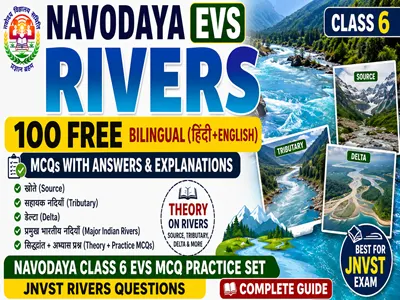
Navodaya Evs Questions Rivers – 100 Best Free Bilingual MCQs
JNVST Rivers Questions – JNVST Class 6 2027 ke EVS Section (JNV Class 6 Natural World Questions) ke liye theory aur 100 practice questions, Hindi aur English dono me — bilkul free, JNV Classes par.
📚 Covers: Navodaya Evs Questions Rivers · Navodaya Class 6 EVS MCQ · JNVST Rivers Questions · Navodaya EVS Practice Set 2027 · JNV Class 6 Natural World Questions
📅 Last Updated: 8 August 2026
Navodaya Evs Questions Rivers – Complete Theory
🇮🇳 हिंदी में
नदी पानी की एक बड़ी, प्राकृतिक धारा होती है जो ऊँचे स्थान से नीचे की ओर बहती है और अंत में समुद्र, महासागर या झील में मिल जाती है। अधिकतर नदियाँ पहाड़ों से शुरू होती हैं — इस शुरुआती बिंदु को उद्गम (source) कहते हैं। छोटी धाराएँ जो बड़ी नदी में मिलती हैं उन्हें सहायक नदी (tributary) कहते हैं, और नदी जहाँ समुद्र से मिलती है उसे मुहाना (mouth) कहते हैं, जहाँ अक्सर डेल्टा बनता है। भारत की प्रमुख नदियाँ हैं गंगा, यमुना, ब्रह्मपुत्र, गोदावरी, कृष्णा, नर्मदा और कावेरी। नदियों का उपयोग पीने, सिंचाई, परिवहन, मछली पकड़ने और बिजली बनाने के लिए होता है। यही Navodaya Evs Questions Rivers topic ka core concept है, jo JNVST Class 6 2027 ke exam me poocha jata hai।
🇬🇧 In English
A river is a large, natural stream of water that flows from a higher place to a lower place and finally meets a sea, ocean, or lake. Most rivers begin in the mountains — this starting point is called the source. Small streams that join a big river are called tributaries, and where a river meets the sea is called its mouth, which often forms a delta. India’s major rivers include the Ganga, Yamuna, Brahmaputra, Godavari, Krishna, Narmada, and Kaveri. Rivers are used for drinking, irrigation, transport, fishing, and generating electricity. This theory forms the base of Navodaya Class 6 EVS MCQ preparation for the Rivers chapter.
Key River Concepts – JNVST Rivers Questions
🏔️ उद्गम / Source
नदी पहाड़ों में बर्फ पिघलने या झरनों से शुरू होती है। / A river begins in the mountains from melting snow or springs.
🌊 सहायक नदी / Tributary
छोटी धाराएँ जो बड़ी नदी में मिलती हैं। / Small streams that join a larger river.
🔺 डेल्टा / Delta
नदी के मुहाने पर बनने वाली त्रिकोणीय भूमि। / Triangular land formed where a river meets the sea.
⚡ बाँध / Dam
पानी जमा करने और बिजली बनाने के लिए नदी पर बनाया जाता है। / Built on rivers to store water and generate electricity.
🛕 घाट / Ghat
नदी किनारे बनी सीढ़ियाँ, स्नान और प्रार्थना के लिए। / Steps built along a riverbank for bathing and prayers.
भारत की नदियों के बारे में आसान तथ्य / Quick Facts about Indian Rivers
गंगा = सबसे पवित्र नदी
Ganga is India’s most sacred riverगंगा = भारत की सबसे लंबी नदी
Ganga is India’s longest riverप्रयागराज = संगम
Prayagraj is where Ganga-Yamuna meetनमामि गंगे
Mission to clean the GangaNavodaya Class 6 EVS MCQ – 100 Bilingual Questions (Navodaya EVS Practice Set 2027)
प्रश्न 1 / Question 1
नदी क्या है?
What is a river?
- Aपानी की बहती हुई बड़ी धारा / A large stream of flowing water
- Bएक शांत तालाब / A still pond
- Cएक बड़ा पेड़ / A large tree
- Dएक ऊँचा पहाड़ / A tall mountain
✅ Answer: A) पानी की बहती हुई बड़ी धारा / A large stream of flowing water
प्रश्न 2 / Question 2
अधिकतर नदियाँ कहाँ से शुरू होती हैं?
Where do most rivers begin?
- Aपहाड़ / Mountains
- Bरेगिस्तान / Deserts
- Cशहर / Cities
- Dकेवल जंगल / Forests only
✅ Answer: A) पहाड़ / Mountains
प्रश्न 3 / Question 3
नदी के शुरुआती बिंदु को क्या कहते हैं?
What is the starting point of a river called?
- Aउद्गम / Source
- Bमुहाना / Mouth
- Cडेल्टा / Delta
- Dकिनारा / Bank
✅ Answer: A) उद्गम / Source
प्रश्न 4 / Question 4
नदी जहाँ समुद्र से मिलती है, उसे क्या कहते हैं?
What is the place called where a river meets the sea?
- Aमुहाना / Mouth
- Bउद्गम / Source
- Cकिनारा / Bank
- Dचोटी / Peak
✅ Answer: A) मुहाना / Mouth
प्रश्न 5 / Question 5
छोटी धाराएँ जो एक बड़ी नदी में मिलती हैं, उन्हें क्या कहते हैं?
What do we call small streams that join a big river?
- Aसहायक नदियाँ / Tributaries
- Bडेल्टा / Deltas
- Cमहासागर / Oceans
- Dकुएँ / Wells
✅ Answer: A) सहायक नदियाँ / Tributaries
प्रश्न 6 / Question 6
नदी जहाँ समुद्र से मिलती है वहाँ बनने वाली त्रिकोणीय भूमि को क्या कहते हैं?
What is the triangular land formed where a river meets the sea called?
- Aडेल्टा / Delta
- Bद्वीप / Island
- Cप्रायद्वीप / Peninsula
- Dघाटी / Valley
✅ Answer: A) डेल्टा / Delta
प्रश्न 7 / Question 7
नदियाँ आमतौर पर ______ स्थान से ______ स्थान की ओर बहती हैं।
Rivers usually flow from a ______ place to a ______ place.
- Aऊँचे, नीचे / Higher, lower
- Bनीचे, ऊँचे / Lower, higher
- Cसूखे, सूखे / Dry, dry
- Dठंडे, गर्म / Cold, hot
✅ Answer: A) ऊँचे, नीचे / Higher, lower
प्रश्न 8 / Question 8
पहाड़ों में इनमें से क्या अक्सर नदी का उद्गम बनता है?
Which of these often forms the source of a river in the mountains?
- Aglacier / Melting snow
- Bएक बड़ी चट्टान / A big rock
- Cएक गुफा / A cave
- Dएक रेगिस्तान / A desert
✅ Answer: A) glacier / Melting snow
प्रश्न 9 / Question 9
नदी के दोनों ओर की भूमि को क्या कहते हैं?
What do we call the land on the two sides of a river?
- Aकिनारे / Banks
- Bउद्गम / Sources
- Cडेल्टा / Deltas
- Dमुहाना / Mouths
✅ Answer: A) किनारे / Banks
प्रश्न 10 / Question 10
नदी अपनी यात्रा आमतौर पर कहाँ समाप्त करती है?
Where does a river usually end its journey?
- Aसमुद्र या महासागर / Sea or ocean
- Bपहाड़ की चोटी / Mountain top
- Cरेगिस्तान / Desert
- Dआकाश / Sky
✅ Answer: A) समुद्र या महासागर / Sea or ocean
प्रश्न 11 / Question 11
जहाँ दो नदियाँ आपस में मिलती हैं, उस स्थान को क्या कहते हैं?
What is the place called where two rivers join together?
- Aसंगम / Confluence
- Bडेल्टा / Delta
- Cउद्गम / Source
- Dकिनारा / Bank
✅ Answer: A) संगम / Confluence
प्रश्न 12 / Question 12
नदी का पानी आमतौर पर खारा होता है या मीठा (स्वच्छ)?
Is river water usually salty or fresh (sweet)?
- Aमीठा / Fresh (sweet)
- Bखारा / Salty
- Cकेवल जमा हुआ / Frozen only
- Dकेवल कीचड़युक्त / Muddy only
✅ Answer: A) मीठा / Fresh (sweet)
प्रश्न 13 / Question 13
इनमें से किसका पानी खारा होता है, नदियों के विपरीत?
Which of these has salty water, unlike rivers?
- Aसमुद्र / Sea
- Bझरना / Spring
- Cधारा / Stream
- Dवर्षा जल / Rainwater
✅ Answer: A) समुद्र / Sea
प्रश्न 14 / Question 14
नदी में जहाँ पानी अचानक ऊँचाई से गिरता है, उसे क्या कहते हैं?
A place where water falls suddenly from a height on a river is called a ______.
- Aझरना / Waterfall
- Bडेल्टा / Delta
- Cकुआँ / Well
- Dतालाब / Pond
✅ Answer: A) झरना / Waterfall
प्रश्न 15 / Question 15
इनमें से कौन-सी नदी नहीं है?
Which of these is NOT a river?
- Aगंगा / Ganga
- Bयमुना / Yamuna
- Cडल झील / Dal Lake
- Dब्रह्मपुत्र / Brahmaputra
✅ Answer: C) डल झील / Dal Lake
प्रश्न 16 / Question 16
जिस प्राकृतिक रास्ते पर नदी बहती है, उसे क्या कहते हैं?
What is the natural path along which a river flows called?
- Aनदी तल / Riverbed
- Bकेवल नदी किनारा / Riverbank only
- Cडेल्टा / Delta
- Dकुआँ / Well
✅ Answer: A) नदी तल / Riverbed
प्रश्न 17 / Question 17
नदी जैसे-जैसे ______ के पास पहुँचती है, वह चौड़ी और धीमी हो जाती है।
A river becomes wider and slower as it moves closer to the ______.
- Aसमुद्र / Sea
- Bपहाड़ की चोटी / Mountain top
- Cउद्गम / Source
- Dग्लेशियर / Glacier
✅ Answer: A) समुद्र / Sea
प्रश्न 18 / Question 18
इनमें से कौन नदियों में स्वाभाविक रूप से रहता है?
Which of these lives naturally in rivers?
- Aमछली / Fish
- Bऊँट / Camel
- Cहाथी / Elephant
- Dमोर / Peacock
✅ Answer: A) मछली / Fish
प्रश्न 19 / Question 19
नदी एक ______ जल स्रोत का उदाहरण है।
A river is an example of a ______ water body.
- Aबहते हुए / Flowing (moving)
- Bस्थिर / Still (standing)
- Cजमे हुए / Frozen
- Dकेवल मानव निर्मित / Man-made only
✅ Answer: A) बहते हुए / Flowing (moving)
प्रश्न 20 / Question 20
इनमें से कौन-सा एक स्थिर (ठहरा हुआ) जल स्रोत है, नदी के विपरीत?
Which of these is a still (standing) water body, unlike a river?
- Aतालाब / Pond
- Bधारा / Stream
- Cझरना / Waterfall
- Dझरना (स्रोत) / Spring
✅ Answer: A) तालाब / Pond
प्रश्न 21 / Question 21
भारत में बहुत से लोग किस नदी को सबसे पवित्र मानते हैं?
Which river is considered most sacred by many people in India?
- Aगंगा / Ganga
- Bटेम्स / Thames
- Cनील / Nile
- Dअमेज़न / Amazon
✅ Answer: A) गंगा / Ganga
प्रश्न 22 / Question 22
गंगा नदी किस पर्वत में शुरू होती है?
In which mountains does the river Ganga begin?
- Aहिमालय / Himalayas
- Bअरावली / Aravalli
- Cविंध्य / Vindhya
- Dनीलगिरि / Nilgiri
✅ Answer: A) हिमालय / Himalayas
प्रश्न 23 / Question 23
दिल्ली से कौन-सी नदी बहती है?
Which river flows through Delhi?
- Aयमुना / Yamuna
- Bगोदावरी / Godavari
- Cकावेरी / Kaveri
- Dनर्मदा / Narmada
✅ Answer: A) यमुना / Yamuna
प्रश्न 24 / Question 24
पूर्वोत्तर भारत की सबसे बड़ी नदी कौन-सी है?
Which is the largest river of North-East India?
- Aब्रह्मपुत्र / Brahmaputra
- Bकावेरी / Kaveri
- Cकृष्णा / Krishna
- Dताप्ती / Tapi
✅ Answer: A) ब्रह्मपुत्र / Brahmaputra
प्रश्न 25 / Question 25
किस नदी को “दक्षिण की गंगा” कहा जाता है?
Which river is known as the “Ganga of the South”?
- Aगोदावरी / Godavari
- Bयमुना / Yamuna
- Cरावी / Ravi
- Dव्यास / Beas
✅ Answer: A) गोदावरी / Godavari
प्रश्न 26 / Question 26
कौन-सी नदी मुख्यतः दक्षिण भारत में, कर्नाटक और तमिलनाडु से होकर बहती है?
Which river flows mainly through South India, through Karnataka and Tamil Nadu?
- Aकावेरी / Kaveri
- Bगंगा / Ganga
- Cयमुना / Yamuna
- Dसतलुज / Sutlej
✅ Answer: A) कावेरी / Kaveri
प्रश्न 27 / Question 27
गुजरात से बहने वाली और स्टैचू ऑफ यूनिटी के लिए प्रसिद्ध नदी कौन-सी है?
Which river is famous for the Statue of Unity and flows through Gujarat?
- Aनर्मदा / Narmada
- Bताप्ती / Tapi
- Cसाबरमती / Sabarmati
- Dमाही / Mahi
✅ Answer: A) नर्मदा / Narmada
प्रश्न 28 / Question 28
प्रयागराज में पवित्र संगम पर कौन-सी दो नदियाँ (एक पौराणिक तीसरी नदी के साथ) मिलती हैं?
Which two rivers meet at the sacred confluence in Prayagraj (along with a mythical third river)?
- Aगंगा और यमुना / Ganga and Yamuna
- Bगोदावरी और कावेरी / Godavari and Kaveri
- Cनर्मदा और ताप्ती / Narmada and Tapi
- Dसतलुज और व्यास / Sutlej and Beas
✅ Answer: A) गंगा और यमुना / Ganga and Yamuna
प्रश्न 29 / Question 29
कोलकाता से कौन-सी नदी बहती है?
Which river flows through Kolkata?
- Aहुगली (गंगा की एक शाखा) / Hooghly (a branch of Ganga)
- Bयमुना / Yamuna
- Cकावेरी / Kaveri
- Dताप्ती / Tapi
✅ Answer: A) हुगली (गंगा की एक शाखा) / Hooghly (a branch of Ganga)
प्रश्न 30 / Question 30
वाराणसी, एक पवित्र शहर, से बहने के लिए कौन-सी नदी प्रसिद्ध है?
Which river is famous for flowing through Varanasi, a holy city?
- Aगंगा / Ganga
- Bकावेरी / Kaveri
- Cनर्मदा / Narmada
- Dव्यास / Beas
✅ Answer: A) गंगा / Ganga
प्रश्न 31 / Question 31
बंगाल की खाड़ी में मिलने से पहले कौन-सी नदी गंगा के साथ मिलकर बड़ा डेल्टा बनाती है?
Which river forms a large delta with the Ganga before meeting the Bay of Bengal?
- Aब्रह्मपुत्र / Brahmaputra
- Bनर्मदा / Narmada
- Cताप्ती / Tapi
- Dकावेरी / Kaveri
✅ Answer: A) ब्रह्मपुत्र / Brahmaputra
प्रश्न 32 / Question 32
महाराष्ट्र और आंध्र प्रदेश सहित अन्य राज्यों से कौन-सी नदी बहती है?
Which river flows through the state of Maharashtra and Andhra Pradesh, among others?
- Aगोदावरी / Godavari
- Bरावी / Ravi
- Cव्यास / Beas
- Dसतलुज / Sutlej
✅ Answer: A) गोदावरी / Godavari
प्रश्न 33 / Question 33
गोदावरी और कावेरी के साथ दक्षिण भारत की एक अन्य प्रमुख नदी कौन-सी है?
Which is one of the major rivers flowing through South India along with Godavari and Kaveri?
- Aकृष्णा / Krishna
- Bयमुना / Yamuna
- Cसतलुज / Sutlej
- Dरावी / Ravi
✅ Answer: A) कृष्णा / Krishna
प्रश्न 34 / Question 34
नील नदी, जो विश्व की सबसे लंबी नदियों में से एक है, किस देश में बहती है?
In which country does the river Nile flow, which is one of the longest rivers in the world?
- Aमिस्र / Egypt
- Bभारत / India
- Cचीन / China
- Dजापान / Japan
✅ Answer: A) मिस्र / Egypt
प्रश्न 35 / Question 35
पंजाब से बहने वाली और पंजाब को उसका नाम देने वाली पाँच नदियों में से एक कौन-सी है?
Which river flows through Punjab and is one of the five rivers giving Punjab its name?
- Aसतलुज / Sutlej
- Bगोदावरी / Godavari
- Cकावेरी / Kaveri
- Dनर्मदा / Narmada
✅ Answer: A) सतलुज / Sutlej
प्रश्न 36 / Question 36
भारत की सबसे लंबी नदी कौन-सी है?
Which river is the longest river in India?
- Aगंगा / Ganga
- Bयमुना / Yamuna
- Cताप्ती / Tapi
- Dव्यास / Beas
✅ Answer: A) गंगा / Ganga
प्रश्न 37 / Question 37
अयोध्या, जो रामायण में महत्वपूर्ण शहर है, से कौन-सी नदी बहती है?
Which river flows through Ayodhya, a city important in the Ramayana?
- Aसरयू / Sarayu
- Bकावेरी / Kaveri
- Cकृष्णा / Krishna
- Dगोदावरी / Godavari
✅ Answer: A) सरयू / Sarayu
प्रश्न 38 / Question 38
जिसके किनारे कुंभ मेला लगता है, वह कौन-सी नदी है?
Which river is famous for the Kumbh Mela held on its banks?
- Aगंगा / Ganga
- Bकावेरी / Kaveri
- Cताप्ती / Tapi
- Dव्यास / Beas
✅ Answer: A) गंगा / Ganga
प्रश्न 39 / Question 39
भारत की कौन-सी नदी बंगाल की खाड़ी के बजाय अरब सागर में गिरती है?
Which river of India flows into the Arabian Sea rather than the Bay of Bengal?
- Aनर्मदा / Narmada
- Bगंगा / Ganga
- Cब्रह्मपुत्र / Brahmaputra
- Dगोदावरी / Godavari
✅ Answer: A) नर्मदा / Narmada
प्रश्न 40 / Question 40
गंगा नदी अंत में किस समुद्र में जाकर मिलती है?
Which sea does the river Ganga finally flow into?
- Aबंगाल की खाड़ी / Bay of Bengal
- Bअरब सागर / Arabian Sea
- Cलाल सागर / Red Sea
- Dकाला सागर / Black Sea
✅ Answer: A) बंगाल की खाड़ी / Bay of Bengal
प्रश्न 41 / Question 41
इनमें से कौन-सी नदी गुजरात से बहती है और अहमदाबाद के पास से गुज़रती है?
Which of these rivers flows through Gujarat and passes near Ahmedabad?
- Aसाबरमती / Sabarmati
- Bकावेरी / Kaveri
- Cसतलुज / Sutlej
- Dव्यास / Beas
✅ Answer: A) साबरमती / Sabarmati
प्रश्न 42 / Question 42
हिमालय में गौमुख नामक ग्लेशियर से कौन-सी नदी निकलती है?
Which river originates from a glacier at Gaumukh in the Himalayas?
- Aगंगा / Ganga
- Bकावेरी / Kaveri
- Cकृष्णा / Krishna
- Dगोदावरी / Godavari
✅ Answer: A) गंगा / Ganga
प्रश्न 43 / Question 43
आगरा, जहाँ ताजमहल स्थित है, से कौन-सी नदी बहती है?
Which river flows through Agra, where the Taj Mahal is located?
- Aयमुना / Yamuna
- Bकावेरी / Kaveri
- Cगोदावरी / Godavari
- Dनर्मदा / Narmada
✅ Answer: A) यमुना / Yamuna
प्रश्न 44 / Question 44
कौन-सी नदी गंगा में मिलने वाली एक प्रमुख सहायक नदी है?
Which river is a major tributary that joins the Ganga?
- Aयमुना / Yamuna
- Bकावेरी / Kaveri
- Cनर्मदा / Narmada
- Dताप्ती / Tapi
✅ Answer: A) यमुना / Yamuna
प्रश्न 45 / Question 45
कावेरी नदी, जिसे उसकी जीवनरेखा भी कहा जाता है, किस राज्य के लिए प्रसिद्ध है?
Which state is famous for the river Kaveri, which is also called its lifeline?
- Aतमिलनाडु / Tamil Nadu
- Bपंजाब / Punjab
- Cराजस्थान / Rajasthan
- Dगुजरात / Gujarat
✅ Answer: A) तमिलनाडु / Tamil Nadu
प्रश्न 46 / Question 46
इनमें से नदी के पानी का एक मुख्य उपयोग क्या है?
Which of these is a main use of river water?
- Aपीने के लिए / Drinking
- Bघर बनाने के लिए / Building houses
- Cखिलौने बनाने के लिए / Making toys
- Dपतंग उड़ाने के लिए / Flying kites
✅ Answer: A) पीने के लिए / Drinking
प्रश्न 47 / Question 47
किसान नदी के पानी का प्रयोग मुख्यतः ______ के लिए करते हैं।
Farmers use river water mainly for ______.
- Aफसलों की सिंचाई / Irrigating (watering) crops
- Bकेवल खाना बनाना / Cooking only
- Cकेवल कार धोना / Washing cars only
- Dपेंटिंग करना / Painting
✅ Answer: A) फसलों की सिंचाई / Irrigating (watering) crops
प्रश्न 48 / Question 48
भोजन के लिए नदियों से इनमें से क्या पकड़ा जाता है?
Which of these is caught from rivers for food?
- Aमछली / Fish
- Bमुर्गी / Chicken
- Cबकरी / Goat
- Dगाय / Cow
✅ Answer: A) मछली / Fish
प्रश्न 49 / Question 49
नदियों पर बिजली बनाने के लिए क्या बनाया जाता है?
What is built on rivers to generate electricity?
- Aबाँध / Dams
- Bकेवल पुल / Bridges only
- Cस्कूल / Schools
- Dकेवल मंदिर / Temples only
✅ Answer: A) बाँध / Dams
प्रश्न 50 / Question 50
नदियों का प्रयोग सामान और लोगों को ले जाने के लिए ______ द्वारा किया जाता है।
Rivers are used to transport goods and people by using ______.
- Aships / Boats
- Bट्रक / Trucks
- Cहवाई जहाज़ / Aeroplanes
- Dरेलगाड़ियाँ / Trains
✅ Answer: A) ships / Boats
प्रश्न 51 / Question 51
बहुत से लोग नदियों के पास रहना क्यों पसंद करते हैं?
Why do many people prefer to live near rivers?
- Aक्योंकि पानी आसानी से उपलब्ध होता है / Because water is easily available
- Bक्योंकि वहाँ बहुत ठंड होती है / Because it is very cold there
- Cक्योंकि वहाँ जानवर नहीं होते / Because there are no animals there
- Dक्योंकि यह खेतों से दूर है / Because it is far from farms
✅ Answer: A) क्योंकि पानी आसानी से उपलब्ध होता है / Because water is easily available
प्रश्न 52 / Question 52
इनमें से किस फसल को उगाने के लिए बहुत नदी/नहर के पानी की आवश्यकता होती है?
Which of these crops needs a lot of river/canal water to grow?
- Aचावल (धान) / Rice (paddy)
- Bकैक्टस / Cactus
- Cरेगिस्तानी घास / Desert grass
- Dकंकड़ / Pebbles
✅ Answer: A) चावल (धान) / Rice (paddy)
प्रश्न 53 / Question 53
नदी पर बना बाँध पानी जमा करने में मदद करता है और ______ को भी रोकता है।
A dam built on a river helps to store water and also prevent ______.
- Aबाढ़ / Floods
- Bवर्षा / Rainfall
- Cभूकंप / Earthquakes
- Dहवा / Wind
✅ Answer: A) बाढ़ / Floods
प्रश्न 54 / Question 54
इनमें से कौन आजीविका के लिए सीधे नदियों पर निर्भर है?
Which of these people directly depends on rivers for their livelihood?
- Aमछुआरे / Fishermen
- Bपायलट / Pilots
- Cअंतरिक्ष यात्री / Astronauts
- Dकेवल कोयला खनिक / Miners of coal only
✅ Answer: A) मछुआरे / Fishermen
प्रश्न 55 / Question 55
नहरें जो नदी के पानी को दूर के खेतों तक ले जाती हैं, मुख्यतः ______ के लिए प्रयोग होती हैं।
Canals that carry river water to far away fields are mainly used for ______.
- Aसिंचाई / Irrigation
- Bहवाई यात्रा / Air travel
- Cकेवल बिजली बनाना / Making electricity only
- Dकेवल मछली पकड़ना / Fishing only
✅ Answer: A) सिंचाई / Irrigation
प्रश्न 56 / Question 56
इनमें से हमारे घरों में हर दिन नदी के पानी का प्रयोग किस काम में होता है?
Which of these uses river water in our homes every day?
- Aकपड़े और बर्तन धोना / Washing clothes and utensils
- Bफोन चार्ज करना / Charging a phone
- Cटेलीविज़न देखना / Watching television
- Dकिताब पढ़ना / Reading a book
✅ Answer: A) कपड़े और बर्तन धोना / Washing clothes and utensils
प्रश्न 57 / Question 57
जलविद्युत शक्ति ______ के बल से बनाई गई बिजली है।
Hydroelectric power is electricity made using the force of ______.
- Aबहते हुए नदी के पानी / Flowing river water
- Bकेवल हवा / Wind only
- Cकेवल सूर्य का प्रकाश / Sunlight only
- Dकेवल कोयला जलाना / Coal burning only
✅ Answer: A) बहते हुए नदी के पानी / Flowing river water
प्रश्न 58 / Question 58
कौन-से जानवर भी पीने के पानी के लिए नदियों पर निर्भर हैं?
Which animals also depend on rivers for drinking water?
- Aजंगली और पालतू जानवर / Wild and domestic animals
- Bकेवल पक्षी / Only birds
- Cकेवल कीड़े / Only insects
- Dकोई जानवर नहीं / No animals
✅ Answer: A) जंगली और पालतू जानवर / Wild and domestic animals
प्रश्न 59 / Question 59
भारत में खेती के लिए नदियाँ महत्वपूर्ण क्यों हैं?
Why are rivers important for farming in India?
- Aवे सिंचाई के लिए पानी देती हैं / They provide water for irrigation
- Bवे बारिश को रोकती हैं / They stop the rain
- Cवे मिट्टी को सूखा बनाती हैं / They make the soil dry
- Dवे हमेशा जमी रहती हैं / They are always frozen
✅ Answer: A) वे सिंचाई के लिए पानी देती हैं / They provide water for irrigation
प्रश्न 60 / Question 60
इनमें से कौन-सा उद्योग अपने काम में नदी के पानी का बड़ी मात्रा में प्रयोग करता है?
Which of these industries uses a large amount of river water in its work?
- Aकागज़ और कपड़ा उद्योग / Paper and cloth industries
- Bकेवल खिलौनों की दुकानें / Toy shops only
- Cकिताबों की दुकानें / Bookstores
- Dकेवल बेकरी / Bakeries only
✅ Answer: A) कागज़ और कपड़ा उद्योग / Paper and cloth industries
प्रश्न 61 / Question 61
गंगा नदी के किनारे कौन-सा पवित्र शहर स्थित है?
Which holy city is located on the banks of the river Ganga?
- Aवाराणसी / Varanasi
- Bजयपुर / Jaipur
- Cशिमला / Shimla
- Dउदयपुर / Udaipur
✅ Answer: A) वाराणसी / Varanasi
प्रश्न 62 / Question 62
प्रयागराज में नदियों के संगम पर हर कुछ वर्षों में लगने वाला कौन-सा मेला है?
Which fair, held every few years, takes place at the confluence of rivers in Prayagraj?
- Aकुंभ मेला / Kumbh Mela
- Bकेवल पुष्कर मेला / Pushkar Fair only
- Cपुस्तक मेला / Book fair
- Dफूल प्रदर्शनी / Flower show
✅ Answer: A) कुंभ मेला / Kumbh Mela
प्रश्न 63 / Question 63
प्राचीन लोग आमतौर पर नदियों के पास अपनी बस्तियाँ क्यों बसाते थे?
Why did ancient people usually build their settlements near rivers?
- Aपानी आसानी से पाने के लिए / For easy access to water
- Bखेतों से दूर रहने के लिए / To stay away from farms
- Cक्योंकि नदियाँ खतरनाक थीं / Because rivers were dangerous
- Dलोगों से बचने के लिए / To avoid people
✅ Answer: A) पानी आसानी से पाने के लिए / For easy access to water
प्रश्न 64 / Question 64
भारत की कौन-सी राजधानी यमुना नदी के किनारे स्थित है?
Which capital city of India is situated on the banks of the river Yamuna?
- Aदिल्ली / Delhi
- Bमुंबई / Mumbai
- Cचेन्नई / Chennai
- Dबेंगलुरु / Bengaluru
✅ Answer: A) दिल्ली / Delhi
प्रश्न 65 / Question 65
लोग त्योहारों के दौरान नदी में स्नान मुख्यतः ______ कारणों से करते हैं।
People take a dip (bathe) in the river during festivals mainly for ______ reasons.
- Aधार्मिक / Religious
- Bखेल संबंधी / Sporting
- Cव्यापारिक / Business
- Dराजनैतिक / Political
✅ Answer: A) धार्मिक / Religious
प्रश्न 66 / Question 66
हावड़ा पुल के लिए प्रसिद्ध पश्चिम बंगाल का कौन-सा शहर हुगली नदी पर स्थित है?
Which West Bengal city, famous for the Howrah Bridge, is located on the river Hooghly?
- Aकोलकाता / Kolkata
- Bपटना / Patna
- Cरांची / Ranchi
- Dभोपाल / Bhopal
✅ Answer: A) कोलकाता / Kolkata
प्रश्न 67 / Question 67
प्राचीन भारतीय सभ्यताएँ, जैसे सिंधु घाटी सभ्यता, ______ के किनारे विकसित हुईं।
Many old Indian civilizations, like the Indus Valley Civilization, grew along the banks of ______.
- Aनदियों / Rivers
- Bकेवल पहाड़ों / Mountains only
- Cकेवल रेगिस्तानों / Deserts only
- Dकेवल जंगलों / Forests only
✅ Answer: A) नदियों / Rivers
प्रश्न 68 / Question 68
उत्तर प्रदेश का कौन-सा शहर, जहाँ गंगा और यमुना मिलती हैं, कुंभ मेले की मेज़बानी करता है?
Which city in Uttar Pradesh, where the Ganga and Yamuna meet, hosts the Kumbh Mela?
- Aप्रयागराज / Prayagraj
- Bलखनऊ / Lucknow
- Cकानपुर / Kanpur
- Dआगरा / Agra
✅ Answer: A) प्रयागराज / Prayagraj
प्रश्न 69 / Question 69
रोज़मर्रा के उपयोग के अलावा, गंगा नदी भारतीय संस्कृति में क्यों महत्वपूर्ण है?
Why is the river Ganga important in Indian culture, apart from daily use?
- Aइसे पवित्र माना जाता है / It is considered sacred
- Bयह सबसे ठंडी नदी है / It is the coldest river
- Cइसमें मछलियाँ नहीं होतीं / It has no fish
- Dइसमें कभी बाढ़ नहीं आती / It never floods
✅ Answer: A) इसे पवित्र माना जाता है / It is considered sacred
प्रश्न 70 / Question 70
नदियों के पास नाव दौड़ और नदी उत्सव अक्सर ______ मनाने के लिए आयोजित किए जाते हैं।
Boat races and river festivals are often held to celebrate ______ near rivers.
- Aस्थानीय परंपराएँ और फसल कटाई / Local traditions and harvest
- Bअंतरिक्ष मिशन / Space missions
- Cकेवल खेल चैंपियनशिप / Sports championships only
- Dराष्ट्रीय चुनाव / National elections
✅ Answer: A) स्थानीय परंपराएँ और फसल कटाई / Local traditions and harvest
प्रश्न 71 / Question 71
बिहार का कौन-सा शहर गंगा नदी के किनारे स्थित है?
Which Bihar city is situated on the banks of the river Ganga?
- Aपटना / Patna
- Bरांची / Ranchi
- Cभोपाल / Bhopal
- Dशिमला / Shimla
✅ Answer: A) पटना / Patna
प्रश्न 72 / Question 72
नदी उत्सवों और जुलूसों के दौरान सजाई और प्रयोग की जाने वाली नावों को क्या कहते हैं?
What do we call boats decorated and used during river festivals and processions?
- Aसजी हुई नावें / Decorated boats
- Bरॉकेट / Rockets
- Cहवाई जहाज़ / Aeroplanes
- Dट्राम / Trams
✅ Answer: A) सजी हुई नावें / Decorated boats
प्रश्न 73 / Question 73
त्योहारों के दौरान लोग नदी किनारे किस कारण से इकट्ठा होते हैं?
Which of these is a reason people gather at riversides during festivals?
- Aपवित्र स्नान और प्रार्थना करने के लिए / To take a holy bath and pray
- Bहवाई जहाज़ देखने के लिए / To watch aeroplanes
- Cपहाड़ चढ़ने के लिए / To climb mountains
- Dरेगिस्तान जाने के लिए / To visit a desert
✅ Answer: A) पवित्र स्नान और प्रार्थना करने के लिए / To take a holy bath and pray
प्रश्न 74 / Question 74
घाट नदी के किनारे बनी सीढ़ियाँ हैं जो मुख्यतः ______ के लिए बनाई जाती हैं।
Ghats are the steps built along a riverbank mainly for ______.
- Aस्नान और प्रार्थना / Bathing and prayers
- Bक्रिकेट खेलना / Playing cricket
- Cपतंग उड़ाना / Flying kites
- Dकार पार्क करना / Parking cars
✅ Answer: A) स्नान और प्रार्थना / Bathing and prayers
प्रश्न 75 / Question 75
इनमें से कौन-सा भारतीय त्योहार नदियों और पवित्र स्नान से गहराई से जुड़ा है?
Which of these Indian festivals is closely connected with rivers and holy dips?
- Aकुंभ मेला / Kumbh Mela
- Bकेवल होली / Holi only
- Cकेवल दिवाली / Diwali only
- Dकेवल ईद / Eid only
✅ Answer: A) कुंभ मेला / Kumbh Mela
प्रश्न 76 / Question 76
नदी के पानी को गंदा और हानिकारक क्या बनाता है?
What makes river water dirty and harmful?
- Aउसमें डाला गया कूड़ा-कचरा और रसायन / Garbage and chemicals thrown into it
- Bसूर्य का प्रकाश / Sunlight
- Cताज़ा वर्षा जल / Fresh rainwater
- Dउसमें रहने वाली मछलियाँ / Fish living in it
✅ Answer: A) उसमें डाला गया कूड़ा-कचरा और रसायन / Garbage and chemicals thrown into it
प्रश्न 77 / Question 77
नदी को साफ रखने के लिए हमें क्या नहीं करना चाहिए?
What should we NOT do to keep a river clean?
- Aउसमें कचरा फेंकना / Throw waste into it
- Bउसके किनारों को साफ रखना / Keep its banks clean
- Cउसके पास पेड़ लगाना / Plant trees near it
- Dप्रदूषण की सूचना देना / Report pollution
✅ Answer: A) उसमें कचरा फेंकना / Throw waste into it
प्रश्न 78 / Question 78
कारखानों से निकलने वाला गंदा पानी क्या कहलाता है?
Dirty water released from factories is called ______.
- Aअपशिष्ट जल / Effluent
- Bवर्षा जल / Rainwater
- Cपेयजल / Drinking water
- Dझरने का पानी / Spring water
✅ Answer: A) अपशिष्ट जल / Effluent
प्रश्न 79 / Question 79
प्रदूषित नदी का पानी ______ के लिए हानिकारक हो सकता है।
Polluted river water can be harmful for ______.
- Aलोगों, मछलियों और जानवरों / People, fish, and animals
- Bकिसी के लिए नहीं / No one
- Cकेवल चट्टानों / Only rocks
- Dकेवल बादलों / Only clouds
✅ Answer: A) लोगों, मछलियों और जानवरों / People, fish, and animals
प्रश्न 80 / Question 80
भारत में गंगा नदी को साफ करने के लिए शुरू किए गए अभियान का नाम क्या है?
What is the name of the mission started in India to clean the river Ganga?
- Aनमामि गंगे / Namami Gange
- Bकेवल सेव वाटर / Save Water only
- Cक्लीन सिटी / Clean City
- Dकेवल ग्रीन इंडिया / Green India only
✅ Answer: A) नमामि गंगे / Namami Gange
प्रश्न 81 / Question 81
सीवेज को नदी में छोड़ने से पहले उपचारित (साफ) किया जाना चाहिए ताकि ______।
Sewage should be treated before releasing into a river to ______.
- Aनदी का पानी साफ रहे / Keep the river water clean
- Bनदी को ठंडा किया जा सके / Make the river colder
- Cनदी को तेज़ बहाया जा सके / Make the river faster
- Dप्रदूषण बढ़े / Increase pollution
✅ Answer: A) नदी का पानी साफ रहे / Keep the river water clean
प्रश्न 82 / Question 82
नदियों में प्लास्टिक कचरा फेंकने से मुख्यतः किसे नुकसान होता है?
Throwing plastic waste into rivers mainly harms ______.
- Aमछलियों और नदी के अन्य जीवों / Fish and other river animals
- Bपहाड़ों / Mountains
- Cसूरज को / The sun
- Dबादलों को / Clouds
✅ Answer: A) मछलियों और नदी के अन्य जीवों / Fish and other river animals
प्रश्न 83 / Question 83
नदियों की सुरक्षा के लिए इनमें से कौन-सी एक अच्छी आदत है?
Which of these is a good habit to protect rivers?
- Aपानी में कचरा न फेंकना / Not throwing garbage into water
- Bनदी में वाहन धोना / Washing vehicles in the river
- Cकारखाने का कचरा नदी में डालना / Dumping factory waste into rivers
- Dनदी किनारे पेड़ काटना / Cutting trees near riverbanks
✅ Answer: A) पानी में कचरा न फेंकना / Not throwing garbage into water
प्रश्न 84 / Question 84
नदी किनारे पेड़ काटने से क्या हो सकता है?
Cutting down trees near riverbanks can lead to ______.
- Aमिट्टी का कटाव / Soil erosion
- Bनदी का पानी साफ होना / Cleaner river water
- Cअधिक मछलियाँ / More fish
- Dकम प्रदूषण / Less pollution
✅ Answer: A) मिट्टी का कटाव / Soil erosion
प्रश्न 85 / Question 85
नदियों में बहुत पानी होते हुए भी हमें उसे क्यों बचाना चाहिए?
Why should we save water from rivers even though they seem to have a lot of it?
- Aक्योंकि साफ मीठा पानी सीमित है / Because clean fresh water is limited
- Bक्योंकि नदियाँ कभी नहीं सूखतीं / Because rivers never dry up
- Cक्योंकि पानी उपयोगी नहीं है / Because water is not useful
- Dक्योंकि नदियाँ खारी होती हैं / Because rivers are salty
✅ Answer: A) क्योंकि साफ मीठा पानी सीमित है / Because clean fresh water is limited
प्रश्न 86 / Question 86
इनमें से कौन-सा प्राकृतिक कारण भी नदी की स्वच्छता को प्रभावित कर सकता है?
Which of these is a natural cause that can also affect a river’s cleanliness?
- Aबाढ़ जो मिट्टी और मलबा लाती है / Floods carrying mud and debris
- Bएक शांत धूप वाला दिन / A calm sunny day
- Cहल्की हवा / A gentle breeze
- Dपास में उगते फूल / Growing flowers nearby
✅ Answer: A) बाढ़ जो मिट्टी और मलबा लाती है / Floods carrying mud and debris
प्रश्न 87 / Question 87
कारखानों को नदी के पास पानी छोड़ने से पहले अपने अपशिष्ट जल के साथ क्या करना चाहिए?
What should factories do with their waste water before releasing it near a river?
- Aउसे उपचारित और साफ करना चाहिए / Treat and clean it
- Bउसे सीधे छोड़ देना चाहिए / Release it directly
- Cअधिक रसायन मिलाना चाहिए / Add more chemicals
- Dउसे गर्म करना चाहिए / Heat it
✅ Answer: A) उसे उपचारित और साफ करना चाहिए / Treat and clean it
प्रश्न 88 / Question 88
पीने के लिए नदी के पानी को साफ रखना क्यों महत्वपूर्ण है?
Why is it important to keep river water clean for drinking?
- Aगंदा पानी बीमारियाँ फैला सकता है / Dirty water can cause diseases
- Bगंदा पानी बेहतर स्वाद देता है / Dirty water tastes better
- Cगंदा पानी सस्ता होता है / Dirty water is cheaper
- Dगंदा पानी अधिक सुरक्षित होता है / Dirty water is safer
✅ Answer: A) गंदा पानी बीमारियाँ फैला सकता है / Dirty water can cause diseases
प्रश्न 89 / Question 89
एक विद्यार्थी नज़दीकी नदी को साफ रखने में मदद के लिए कौन-सा सरल कार्य कर सकता है?
Which simple action can a student take to help keep a nearby river clean?
- Aनदी के पास कचरा न फैलाना / Not littering near the river
- Bनदी में बोतलें फेंकना / Throwing bottles into the river
- Cनदी में हानिकारक साबुन से कपड़े धोना / Washing clothes with harmful soap in the river
- Dप्रदूषण को नज़रअंदाज़ करना / Ignoring pollution
✅ Answer: A) नदी के पास कचरा न फैलाना / Not littering near the river
प्रश्न 90 / Question 90
इनमें से कौन-सा “नदी संरक्षण” का सबसे अच्छा वर्णन करता है?
Which of these best describes “river conservation”?
- Aनदियों को प्रदूषण और अधिक उपयोग से बचाना / Protecting rivers from pollution and overuse
- Bनदियों पर अधिक कारखाने बनाना / Building more factories on rivers
- Cनदियों को कचरे से भरना / Filling rivers with garbage
- Dनदी के पानी का सारा उपयोग रोकना / Stopping all use of river water
✅ Answer: A) नदियों को प्रदूषण और अधिक उपयोग से बचाना / Protecting rivers from pollution and overuse
प्रश्न 91 / Question 91
एक नदी जो एक बड़ी नदी में मिलती है, कहलाती है ______।
A river that flows into a bigger river is called a ______.
- Aसहायक नदी / Tributary
- Bडेल्टा / Delta
- Cमहासागर / Ocean
- Dग्लेशियर / Glacier
✅ Answer: A) सहायक नदी / Tributary
प्रश्न 92 / Question 92
जहाँ से नदी बहना शुरू करती है, उसे उसका ______ कहते हैं।
The place where a river begins flowing is called its ______.
- Aउद्गम / Source
- Bमुहाना / Mouth
- Cडेल्टा / Delta
- Dकिनारा / Bank
✅ Answer: A) उद्गम / Source
प्रश्न 93 / Question 93
नदी के मुहाने पर कई छोटी धाराओं से बनी भूमि को ______ कहते हैं।
The land formed by many small streams at the mouth of a river is called a ______.
- Aडेल्टा / Delta
- Bउद्गम / Source
- Cसंगम / Confluence
- Dझरना / Waterfall
✅ Answer: A) डेल्टा / Delta
प्रश्न 94 / Question 94
जब दो नदियाँ एक स्थान पर मिलती हैं, तो उस मिलन स्थान को ______ कहते हैं।
When two rivers meet at one place, that meeting point is called a ______.
- Aसंगम / Confluence
- Bडेल्टा / Delta
- Cमुहाना / Mouth
- Dकिनारा / Bank
✅ Answer: A) संगम / Confluence
प्रश्न 95 / Question 95
वह पूरा क्षेत्र जिससे नदी और उसकी सहायक नदियाँ पानी इकट्ठा करती हैं, किस शब्द से जाना जाता है?
Which term describes the entire area of land from which a river and its tributaries collect water?
- Aनदी बेसिन / River basin
- Bनदी किनारा / Riverbank
- Cनदी मुहाना / River mouth
- Dनदी उद्गम / River source
✅ Answer: A) नदी बेसिन / River basin
प्रश्न 96 / Question 96
पहाड़ों में पाई जाने वाली धीरे-धीरे खिसकने वाली बर्फ की विशाल राशि, जो नदी का स्रोत हो सकती है, क्या कहलाती है?
What do we call the huge mass of slowly moving ice found in mountains that can be a river’s source?
- Aग्लेशियर / Glacier
- Bडेल्टा / Delta
- Cलैगून / Lagoon
- Dतालाब / Pond
✅ Answer: A) ग्लेशियर / Glacier
प्रश्न 97 / Question 97
नदी में किसी खड़ी चट्टानी जगह से गिरता हुआ पानी क्या कहलाता है?
What is the water flowing over the edge of a steep rocky area on a river called?
- Aझरना / Waterfall
- Bडेल्टा / Delta
- Cसंगम / Confluence
- Dज्वारनदमुख / Estuary
✅ Answer: A) झरना / Waterfall
प्रश्न 98 / Question 98
नदी का वह चौड़ा भाग जहाँ यह समुद्र से मिलती है और मीठा पानी खारे पानी से मिलता है, ______ कहलाता है।
The wide part where a river meets the sea and its fresh water mixes with the salty sea water is called an ______.
- Aज्वारनदमुख / Estuary
- Bग्लेशियर / Glacier
- Cझरना / Waterfall
- Dझरना (स्रोत) / Spring
✅ Answer: A) ज्वारनदमुख / Estuary
प्रश्न 99 / Question 99
जब भारी बारिश के कारण नदी अपने किनारों से बाहर बहने लगती है, तो उसे क्या कहते हैं?
What do we call it when a river overflows its banks due to heavy rain?
- Aबाढ़ / Flood
- Bसूखा / Drought
- Cडेल्टा / Delta
- Dसंगम / Confluence
✅ Answer: A) बाढ़ / Flood
प्रश्न 100 / Question 100
लंबे समय तक बारिश न होने के कारण बहुत कम या बिल्कुल पानी न होने की स्थिति को ______ कहते हैं।
A place with very little or no water due to lack of rain over a long time is said to be facing a ______.
- Aसूखा / Drought
- Bबाढ़ / Flood
- Cडेल्टा / Delta
- Dज्वारनदमुख / Estuary
✅ Answer: A) सूखा / Drought
🎓 Navodaya Class 6 EVS MCQ की Complete तैयारी – JNV Classes पर
Free Navodaya EVS Practice Set 2027, Mock Tests, Previous Year Papers और Live Classes — सब एक जगह।
🆓 Free Mock Test शुरू करेंNavodaya Evs Questions Rivers – FAQs
Navodaya Evs Questions Rivers topic se JNVST paper me kitne questions aate hain?
JNVST Class 6 ke EVS section (Natural World part) me Rivers jaise topics se 1-2 direct questions puche ja sakte hain, isliye Navodaya Class 6 EVS MCQ practice zaroori hai.
Nadi ka source, tributary aur delta kya hote hain?
Source nadi ka shuruaati bindu hota hai, tributary chhoti dhaara hai jo badi nadi me milti hai, aur delta nadi ke muhaane par bante trikonaakaar bhumi hai. Yeh JNVST Rivers Questions ka core concept hai.
Is Navodaya EVS Practice Set 2027 ke 100 MCQs kis level ke hain?
Sabhi 100 questions NCERT Class 1-5 EVS level ke hain aur JNVST Class 6 2027 syllabus ke JNV Class 6 Natural World Questions section ke anusar taiyar kiye gaye hain.
Kya Navodaya Evs Questions Rivers bilingual (Hindi + English) hain?
Haan, har question, options aur answer Hindi aur English dono me diya gaya hai taaki students dono medium me Navodaya Class 6 EVS MCQ practice kar sakein.