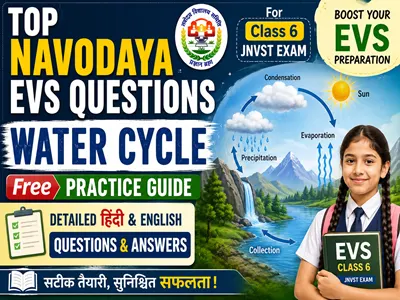
Best Navodaya Evs Questions WATER CYCLE Free 2026 Guide
JNVST Water Cycle Questions – JNVST Class 6 2026-2027 ke EVS Section ke liye theory, paragraph aur 100 practice questions, Hindi aur English dono me — bilkul free, JNV Classes par.
📚 Covers: Navodaya Evs Questions WATER CYCLE · Jawahar Navodaya Vidyalaya EVS Quiz · JNVST Water Cycle Practice Set · Navodaya Class 6 Science Questions · JNV Entrance Exam Water Cycle MCQ
📅 Last Updated: 8 August 2026
Navodaya Evs Questions WATER CYCLE – Complete Theory
🇮🇳 हिंदी में (अनुच्छेद एवं थ्योरी)
पृथ्वी पर पानी एक बड़े चक्र में लगातार घूमता रहता है। इस चक्र को जल चक्र (Water Cycle) कहते हैं। सूर्य महासागरों, नदियों, झीलों और तालाबों के पानी को गर्म करता है। गर्मी से यह पानी जल वाष्प (गैस) में बदल जाता है। इस प्रक्रिया को वाष्पीकरण (Evaporation) कहते हैं। जल वाष्प ऊपर आसमान में जाता है और ठंडा होकर पानी की छोटी-छोटी बूंदों में बदलकर बादल बनाता है। इस प्रक्रिया को संघनन (Condensation) कहते हैं।
जब बादल पानी से भारी हो जाते हैं, तो पानी वर्षा, बर्फ या ओलों के रूप में धरती पर गिरता है। इसे वर्षण (Precipitation) कहते हैं। गिरा हुआ पानी नदियों, झीलों, महासागरों और जमीन के नीचे संग्रहण (Collection) के रूप में इकट्ठा होता है। पौधे भी वाष्पोत्सर्जन (Transpiration) द्वारा जल वाष्प छोड़ते हैं। SSC सामान्य ज्ञान की तैयारी के लिए आप sscgkgs.com पर भी विजिट कर सकते हैं।
🇬🇧 In English (Paragraph & Theory)
Water on the Earth keeps moving in a big circle called the Water Cycle. The sun heats up the water in oceans, rivers, and lakes. The heat turns this water into water vapour through a process called Evaporation. The water vapour rises into the sky, cools down, and turns into tiny droplets forming clouds, known as Condensation.
When clouds become heavy, water falls back to Earth as rain, snow, or hail, which is called Precipitation. The fallen water collects in rivers, lakes, oceans, and underground as groundwater through Collection. Plants also release water vapour into the air via transpiration. For more study material, visit jnvclasses.com.
जल चक्र के 4 मुख्य चरण / 4 Main Steps
1. वाष्पीकरण
Evaporation (Sun’s heat)2. संघनन
Condensation (Clouds form)3. वर्षण
Precipitation (Rain/Snow)4. संग्रहण
Collection (Rivers/Oceans)Navodaya Evs Questions WATER CYCLE – 100 Bilingual MCQs
प्रश्न 1 / Question 1
जल चक्र क्या है?
What is the water cycle?
- Aपृथ्वी के चारों ओर पानी का बार-बार घूमना / The movement of water around the Earth again and again
- Bएक तरह का वाहन / A type of vehicle
- Cएक तरह का भोजन / A kind of food
- Dएक त्योहार / A festival
✅ Answer: A) पृथ्वी के चारों ओर पानी का बार-बार घूमना / The movement of water around the Earth again and again
प्रश्न 2 / Question 2
महासागरों और नदियों के पानी को कौन गर्म करता है?
Which of these heats up the water in oceans and rivers?
- Aचंद्रमा / The Moon
- Bसूर्य / The Sun
- Cबादल / A cloud
- Dनदी / A river
✅ Answer: B) सूर्य / The Sun
प्रश्न 3 / Question 3
गर्मी से पानी के वाष्प में बदलने की प्रक्रिया को क्या कहते हैं?
What do we call the process of water turning into vapour due to heat?
- Aसंघनन / Condensation
- Bवर्षण / Precipitation
- Cवाष्पीकरण / Evaporation
- Dसंग्रहण / Collection
✅ Answer: C) वाष्पीकरण / Evaporation
प्रश्न 4 / Question 4
जल वाष्प क्या है?
What is water vapour?
- Aबर्फ के रूप में पानी / Water in the form of ice
- Bकीचड़ के रूप में पानी / Water in the form of mud
- Cपत्थर के रूप में पानी / Water in the form of stone
- Dगैस के रूप में पानी / Water in the form of gas
✅ Answer: D) गैस के रूप में पानी / Water in the form of gas
प्रश्न 5 / Question 5
वाष्पीकरण के बाद जल वाष्प कहाँ जाता है?
Where does water vapour go after evaporation?
- Aजमीन के नीचे / Under the ground
- Bआसमान में / Into the sky
- Cपेड़ में / Into a tree
- Dकार में / Into a car
✅ Answer: B) आसमान में / Into the sky
प्रश्न 6 / Question 6
आसमान में ठंडा होने पर जल वाष्प का क्या होता है?
What happens to water vapour when it cools down in the sky?
- Aवह गायब हो जाता है / It disappears
- Bवह आग बन जाता है / It turns into fire
- Cवह पानी की बूंदों में बदलकर बादल बनाता है / It turns into water droplets and forms clouds
- Dवह रेत बन जाता है / It becomes sand
✅ Answer: C) वह पानी की बूंदों में बदलकर बादल बनाता है / It turns into water droplets and forms clouds
प्रश्न 7 / Question 7
जल वाष्प के पानी की बूंदों में बदलने की प्रक्रिया को क्या कहते हैं?
What do we call the process of water vapour changing into water droplets?
- Aवाष्पीकरण / Evaporation
- Bप्रदूषण / Pollution
- Cवर्षण / Precipitation
- Dसंघनन / Condensation
✅ Answer: D) संघनन / Condensation
प्रश्न 8 / Question 8
बादल किससे बने होते हैं?
What are clouds made of?
- Aपानी की छोटी बूंदें / Tiny water droplets
- Bकेवल धुआँ / Smoke only
- Cरेत / Sand
- Dरुई / Cotton
✅ Answer: A) पानी की छोटी बूंदें / Tiny water droplets
प्रश्न 9 / Question 9
बादलों से वर्षा, बर्फ या ओलों के रूप में पानी गिरने को क्या कहते हैं?
What do we call water falling from clouds as rain, snow, or hail?
- Aवाष्पीकरण / Evaporation
- Bवर्षण / Precipitation
- Cसंघनन / Condensation
- Dसंग्रहण / Collection
✅ Answer: B) वर्षण / Precipitation
प्रश्न 10 / Question 10
इनमें से कौन वर्षण का एक रूप है?
Which of these is a form of precipitation?
- Aधूप / Sunlight
- Bहवा / Wind
- Cवर्षा / Rain
- Dबादल / Cloud
✅ Answer: C) वर्षा / Rain
प्रश्न 11 / Question 11
ठंडी जगहों पर दिखने वाला वर्षण का एक और रूप कौन सा है?
Which of these is also a form of precipitation, seen in cold places?
- Aधूप / Sunshine
- Bधुआँ / Smoke
- Cधूल / Dust
- Dबर्फ / Snow
✅ Answer: D) बर्फ / Snow
प्रश्न 12 / Question 12
आसमान से गिरने वाली बर्फ की छोटी गोलियों को क्या कहते हैं?
What do we call small balls of ice that fall from the sky?
- Aओले / Hail
- Bवर्षा / Rain
- Cओस / Dew
- Dकोहरा / Fog
✅ Answer: A) ओले / Hail
प्रश्न 13 / Question 13
बारिश के बाद पानी कहाँ जाता है?
After it rains, where does the water go?
- Aयह हमेशा के लिए गायब हो जाता है / It disappears forever
- Bयह नदियों, झीलों, महासागरों और जमीन में इकट्ठा होता है / It collects in rivers, lakes, oceans and the ground
- Cयह पत्थर बन जाता है / It turns into stone
- Dयह हवा बन जाता है / It turns into wind
✅ Answer: B) यह नदियों, झीलों, महासागरों और जमीन में इकट्ठा होता है / It collects in rivers, lakes, oceans and the ground
प्रश्न 14 / Question 14
जमीन के नीचे जाने वाले वर्षा के पानी को क्या कहते हैं?
What do we call rain water that goes under the ground?
- Aबादल का पानी / Cloud water
- Bआसमानी पानी / Sky water
- Cभूजल / Groundwater
- Dसमुद्री नमक / Sea salt
✅ Answer: C) भूजल / Groundwater
प्रश्न 15 / Question 15
जल चक्र के अंतिम चरण को क्या कहते हैं?
What is the last step of the water cycle called?
- Aवाष्पीकरण / Evaporation
- Bसंघनन / Condensation
- Cधूप / Sunlight
- Dसंग्रहण / Collection
✅ Answer: D) संग्रहण / Collection
प्रश्न 16 / Question 16
पूरे जल चक्र को कौन शक्ति देता है?
What powers the whole water cycle?
- Aसूर्य की गर्मी / Heat from the Sun
- Bकेवल हवा / Wind only
- Cबिजली / Electricity
- Dआग / Fire
✅ Answer: A) सूर्य की गर्मी / Heat from the Sun
प्रश्न 17 / Question 17
क्या जल चक्र कभी रुकता है?
Does the water cycle ever stop?
- Aहाँ, साल में एक बार / Yes, once a year
- Bनहीं, यह बार-बार चलता रहता है / No, it keeps repeating again and again
- Cहाँ, केवल गर्मियों में / Yes, only in summer
- Dहाँ, केवल रात में / Yes, only at night
✅ Answer: B) नहीं, यह बार-बार चलता रहता है / No, it keeps repeating again and again
प्रश्न 18 / Question 18
इनमें से कौन जल चक्र का एक चरण नहीं है?
Which of these is NOT a step of the water cycle?
- Aवाष्पीकरण / Evaporation
- Bसंघनन / Condensation
- Cखाना पकाना / Cooking
- Dवर्षण / Precipitation
✅ Answer: C) खाना पकाना / Cooking
प्रश्न 19 / Question 19
पृथ्वी पर अधिकतर पानी कहाँ से वाष्पित होता है?
From where does most of the water on Earth evaporate?
- Aरेगिस्तानों से / Deserts
- Bपहाड़ों से / Mountains
- Cकेवल जंगलों से / Forests only
- Dमहासागरों से / Oceans
✅ Answer: D) महासागरों से / Oceans
प्रश्न 20 / Question 20
पौधे हवा में क्या छोड़ते हैं, जो जल चक्र में मदद करता है?
What do plants release into the air, which helps the water cycle?
- Aजल वाष्प (वाष्पोत्सर्जन) / Water vapour (transpiration)
- Bधुआँ / Smoke
- Cतेल / Oil
- Dरेत / Sand
✅ Answer: A) जल वाष्प (वाष्पोत्सर्जन) / Water vapour (transpiration)
प्रश्न 21 / Question 21
इनमें से कौन एक जल स्रोत का उदाहरण है जहाँ से वाष्पीकरण होता है?
Which of these is an example of a water body from where evaporation happens?
- Aएक किताब / A book
- Bएक नदी / A river
- Cएक कुर्सी / A chair
- Dएक गेंद / A ball
✅ Answer: B) एक नदी / A river
प्रश्न 22 / Question 22
जब बादल पानी से बहुत भारी हो जाते हैं तो क्या होता है?
What happens to clouds when they become too heavy with water?
- Aवे उड़ जाते हैं / They fly away
- Bवे गायब हो जाते हैं / They disappear
- Cवे वर्षा या बर्फ के रूप में पानी छोड़ते हैं / They release water as rain or snow
- Dवे नीले हो जाते हैं / They turn blue
✅ Answer: C) वे वर्षा या बर्फ के रूप में पानी छोड़ते हैं / They release water as rain or snow
प्रश्न 23 / Question 23
जल चक्र हमारे लिए क्यों महत्वपूर्ण है?
Why is the water cycle important for us?
- Aयह खिलौने बनाता है / It makes toys
- Bयह घर बनाता है / It builds houses
- Cयह भोजन को रंगीन बनाता है / It makes food colourful
- Dयह हमें बार-बार ताज़ा पानी देता है / It gives us fresh water again and again
✅ Answer: D) यह हमें बार-बार ताज़ा पानी देता है / It gives us fresh water again and again
प्रश्न 24 / Question 24
भारत में आमतौर पर किस मौसम में सबसे ज़्यादा वर्षा होती है?
Which season usually has the most rainfall in India?
- Aमानसून का मौसम / Monsoon season
- Bकेवल सर्दी का मौसम / Winter season only
- Cकेवल गर्मी का मौसम / Summer season only
- Dकेवल बसंत का मौसम / Spring season only
✅ Answer: A) मानसून का मौसम / Monsoon season
प्रश्न 25 / Question 25
आसमान में ऊँचाई पर जल वाष्प के सीधे बादल में बदलने को क्या कहते हैं?
What do we call water vapour turning directly into clouds high in the sky?
- Aवाष्पीकरण / Evaporation
- Bसंघनन / Condensation
- Cपाचन / Digestion
- Dप्रदूषण / Pollution
✅ Answer: B) संघनन / Condensation
प्रश्न 26 / Question 26
इनमें से कौन वाष्पीकरण का सबसे अच्छा वर्णन करता है?
Which of these best describes evaporation?
- Aगैस का तरल पानी में बदलना / Gas changing into liquid water
- Bबर्फ का कीचड़ में पिघलना / Ice melting into mud
- Cगर्मी से तरल पानी का गैस में बदलना / Liquid water changing into gas due to heat
- Dपानी का चट्टान में बदलना / Water turning into rock
✅ Answer: C) गर्मी से तरल पानी का गैस में बदलना / Liquid water changing into gas due to heat
प्रश्न 27 / Question 27
इनमें से कौन संघनन का सबसे अच्छा वर्णन करता है?
Which of these best describes condensation?
- Aपानी का गर्म होकर गायब होना / Water heating and disappearing
- Bबर्फ का ओले बनना / Ice becoming hail
- Cबारिश का जमीन पर गिरना / Rain falling on the ground
- Dजल वाष्प का ठंडा होकर पानी की बूंदों में बदलना / Water vapour cooling and changing into tiny water droplets
✅ Answer: D) जल वाष्प का ठंडा होकर पानी की बूंदों में बदलना / Water vapour cooling and changing into tiny water droplets
प्रश्न 28 / Question 28
आसमान से वर्षा, बर्फ या ओलों के रूप में पानी गिरने के लिए कौन सा शब्द है?
Which word means water falling from the sky as rain, snow, or hail?
- Aवर्षण / Precipitation
- Bवाष्पीकरण / Evaporation
- Cसंघनन / Condensation
- Dनिस्पंदन / Filtration
✅ Answer: A) वर्षण / Precipitation
प्रश्न 29 / Question 29
हमारे ग्रह पर अधिकतर पानी कहाँ पाया जाता है?
Where is most of the water found on our planet?
- Aकेवल बादलों में / In clouds only
- Bमहासागरों में / In oceans
- Cकेवल नदियों में / In rivers only
- Dकेवल कुओं में / In wells only
✅ Answer: B) महासागरों में / In oceans
प्रश्न 30 / Question 30
कुओं से मिलने वाले भूमिगत पानी को क्या कहते हैं?
What do we call the underground water that we get from wells?
- Aबादल का पानी / Cloud water
- Bसमुद्री पानी / Sea water
- Cभूजल / Groundwater
- Dइंद्रधनुष का पानी / Rainbow water
✅ Answer: C) भूजल / Groundwater
प्रश्न 31 / Question 31
कोहरा क्या है?
What is fog?
- Aएक प्रकार की वर्षा / A type of rain
- Bएक प्रकार की नदी / A type of river
- Cएक प्रकार की बर्फ / A type of ice
- Dजमीन के पास बनने वाले बादल / Clouds that form close to the ground
✅ Answer: D) जमीन के पास बनने वाले बादल / Clouds that form close to the ground
प्रश्न 32 / Question 32
ओस क्या है?
What is dew?
- Aसुबह घास और पत्तियों पर बनने वाली पानी की छोटी बूंदें / Tiny water droplets that form on grass and leaves in the morning
- Bएक प्रकार का बादल / A type of cloud
- Cएक प्रकार का ओला / A type of hailstone
- Dएक प्रकार की नदी / A type of river
✅ Answer: A) सुबह घास और पत्तियों पर बनने वाली पानी की छोटी बूंदें / Tiny water droplets that form on grass and leaves in the morning
प्रश्न 33 / Question 33
इनमें से कौन जल चक्र का सही क्रम दिखाता है?
Which of these correctly shows the order of the water cycle?
- Aसंग्रहण, वाष्पीकरण, वर्षण, संघनन / Collection, Evaporation, Precipitation, Condensation
- Bवाष्पीकरण, संघनन, वर्षण, संग्रहण / Evaporation, Condensation, Precipitation, Collection
- Cवर्षण, संग्रहण, संघनन, वाष्पीकरण / Precipitation, Collection, Condensation, Evaporation
- Dसंघनन, वर्षण, वाष्पीकरण, संग्रहण / Condensation, Precipitation, Evaporation, Collection
✅ Answer: B) वाष्पीकरण, संघनन, वर्षण, संग्रहण / Evaporation, Condensation, Precipitation, Collection
प्रश्न 34 / Question 34
जल वाष्प आसमान में ऊपर क्यों उठता है?
Why does water vapour rise up into the sky?
- Aक्योंकि यह हवा से भारी होता है / Because it is heavier than air
- Bक्योंकि हवा इसे नीचे धकेलती है / Because wind pushes it down
- Cक्योंकि यह तरल पानी से हल्का होता है और गर्मी के साथ ऊपर उठता है / Because it is lighter than liquid water and rises with heat
- Dक्योंकि यह ठंडा होता है / Because it is cold
✅ Answer: C) क्योंकि यह तरल पानी से हल्का होता है और गर्मी के साथ ऊपर उठता है / Because it is lighter than liquid water and rises with heat
प्रश्न 35 / Question 35
खुली प्लेट में रखे पानी के वाष्पीकरण को कौन सा तेज करेगा?
Which of these would speed up evaporation of water kept in an open plate?
- Aइसे फ्रिज में रखना / Placing it in a fridge
- Bइसे कसकर ढकना / Covering it tightly
- Cइसे अंधेरे ठंडे कमरे में रखना / Placing it in a dark cold room
- Dइसे धूप में रखना / Placing it in sunlight
✅ Answer: D) इसे धूप में रखना / Placing it in sunlight
प्रश्न 36 / Question 36
गीले कपड़े धूप में तेजी से क्यों सूखते हैं?
Why do wet clothes dry faster in sunlight?
- Aक्योंकि गर्मी पानी को तेजी से वाष्पित होने में मदद करती है / Because heat helps water evaporate faster
- Bक्योंकि धूप कपड़ों को भारी बना देती है / Because sunlight makes clothes heavier
- Cक्योंकि धूप पानी जोड़ती है / Because sunlight adds water
- Dक्योंकि धूप कपड़ों को ठंडा करती है / Because sunlight cools the clothes
✅ Answer: A) क्योंकि गर्मी पानी को तेजी से वाष्पित होने में मदद करती है / Because heat helps water evaporate faster
प्रश्न 37 / Question 37
इनमें से कौन घर में दिखने वाला संघनन का उदाहरण है?
Which of these is an example of condensation we see at home?
- Aपैन में पानी उबलना / Water boiling in a pan
- Bठंडे पानी के गिलास पर पानी की बूंदें बनना / Water droplets forming on a cold glass of water
- Cधूप में बर्फ पिघलना / Ice melting in the sun
- Dपानी में नमक घुलना / Salt dissolving in water
✅ Answer: B) ठंडे पानी के गिलास पर पानी की बूंदें बनना / Water droplets forming on a cold glass of water
प्रश्न 38 / Question 38
बारिश के बाद जमीन पर बहकर नदियों में जाने वाले पानी को क्या कहते हैं?
What do we call water that flows over land into rivers after rain?
- Aवाष्पीकरण / Evaporation
- Bसंघनन / Condensation
- Cअपवाह (Runoff) / Runoff
- Dवाष्पोत्सर्जन / Transpiration
✅ Answer: C) अपवाह (Runoff) / Runoff
प्रश्न 39 / Question 39
इनमें से कौन सा जल स्रोत केवल भूमि पर वर्षण के इकट्ठा होने से बनता है?
Which of these water sources is formed only by precipitation collecting over the land?
- Aएक महासागर / An ocean
- Bएक कुआं / A well
- Cएक नल / A tap
- Dबारिश के बाद बना गड्ढे का पानी / A puddle after rain
✅ Answer: D) बारिश के बाद बना गड्ढे का पानी / A puddle after rain
प्रश्न 40 / Question 40
जल चक्र के लिए ताज़े पानी का मुख्य स्रोत क्या है?
What is the main source of fresh water for the water cycle?
- Aवर्षा / Rain
- Bनमक / Salt
- Cमिट्टी / Soil
- Dधूप / Sunlight
✅ Answer: A) वर्षा / Rain
प्रश्न 41 / Question 41
हालांकि जल चक्र पानी वापस लाता है, फिर भी हमें पानी बर्बाद क्यों नहीं करना चाहिए?
Why should we not waste water even though the water cycle brings it back?
- Aक्योंकि पानी की किसी को जरूरत नहीं है / Because water is not needed by anyone
- Bक्योंकि साफ ताज़ा पानी सीमित है और फिर से उपलब्ध होने में समय लगता है / Because clean fresh water is limited and takes time to be available again
- Cक्योंकि पानी कभी वापस नहीं आता / Because water never comes back
- Dक्योंकि बारिश फिर कभी नहीं होती / Because rain never falls again
✅ Answer: B) क्योंकि साफ ताज़ा पानी सीमित है और फिर से उपलब्ध होने में समय लगता है / Because clean fresh water is limited and takes time to be available again
प्रश्न 42 / Question 42
इनमें से वर्षण का सबसे ठंडा रूप कौन सा है?
Which of these is the coldest form of precipitation?
- Aवर्षा / Rain
- Bओस / Dew
- Cबर्फ / Snow
- Dकोहरा / Fog
✅ Answer: C) बर्फ / Snow
प्रश्न 43 / Question 43
इनमें से कौन सबसे अच्छी तरह समझाता है कि महासागर जल चक्र के लिए क्यों महत्वपूर्ण हैं?
Which of these best explains why oceans are important to the water cycle?
- Aवे हमेशा जमे रहते हैं / They are always frozen
- Bउनमें कोई पानी नहीं है / They do not have any water
- Cवे जल चक्र को रोकते हैं / They stop the water cycle
- Dउनमें पृथ्वी का अधिकतर पानी है और वे इससे वाष्पित होते हैं / They hold most of Earth’s water and it evaporates from them
✅ Answer: D) उनमें पृथ्वी का अधिकतर पानी है और वे इससे वाष्पित होते हैं / They hold most of Earth’s water and it evaporates from them
प्रश्न 44 / Question 44
बारिश से पहले आसमान को ढकने वाले बादलों की परत को क्या कहते हैं?
What do we call the layer of clouds that covers the sky before it rains?
- Aबादलों का आवरण / Cloud cover
- Bइंद्रधनुष / Rainbow
- Cधूप / Sunshine
- Dकेवल कोहरा / Fog only
✅ Answer: A) बादलों का आवरण / Cloud cover
प्रश्न 45 / Question 45
जल चक्र में सबसे पहले क्या होता है?
Which of the following happens first in the water cycle?
- Aजमीन पर बारिश गिरना / Rain falling on the ground
- Bसूर्य की गर्मी से पानी का वाष्पीकरण / Evaporation of water due to the sun’s heat
- Cबादलों का बनना / Clouds forming
- Dनदियों में पानी का इकट्ठा होना / Water collecting in rivers
✅ Answer: B) सूर्य की गर्मी से पानी का वाष्पीकरण / Evaporation of water due to the sun’s heat
प्रश्न 46 / Question 46
जल चक्र में वाष्पीकरण के तुरंत बाद क्या होता है?
What happens right after evaporation in the water cycle?
- Aवर्षण / Precipitation
- Bसंग्रहण / Collection
- Cसंघनन (बादल बनना) / Condensation (forming clouds)
- Dप्रदूषण / Pollution
✅ Answer: C) संघनन (बादल बनना) / Condensation (forming clouds)
प्रश्न 47 / Question 47
जल चक्र में संघनन के तुरंत बाद क्या होता है?
What happens right after condensation in the water cycle?
- Aवाष्पीकरण / Evaporation
- Bकेवल संग्रहण / Collection only
- Cकुछ नहीं होता / Nothing happens
- Dवर्षण (वर्षा, बर्फ, ओले) / Precipitation (rain, snow, hail)
✅ Answer: D) वर्षण (वर्षा, बर्फ, ओले) / Precipitation (rain, snow, hail)
प्रश्न 48 / Question 48
जल चक्र में वर्षण के तुरंत बाद क्या होता है?
What happens right after precipitation in the water cycle?
- Aनदियों, झीलों, महासागरों और जमीन में पानी का इकट्ठा होना / Collection of water in rivers, lakes, oceans, and ground
- Bतुरंत वाष्पीकरण / Evaporation immediately
- Cतुरंत संघनन / Condensation immediately
- Dचक्र रुक जाता है / The cycle stops
✅ Answer: A) नदियों, झीलों, महासागरों और जमीन में पानी का इकट्ठा होना / Collection of water in rivers, lakes, oceans, and ground
प्रश्न 49 / Question 49
पहाड़ों की चोटियों पर अक्सर बर्फ क्यों होती है?
Why do mountains often have snow on their peaks?
- Aक्योंकि वहाँ पानी नहीं है / Because there is no water there
- Bक्योंकि वहाँ बहुत ठंड होती है और वर्षण बर्फ के रूप में गिरता है / Because it is very cold there and precipitation falls as snow
- Cक्योंकि वहाँ सूरज कभी नहीं चमकता / Because the sun never shines there
- Dक्योंकि वहाँ बादल नहीं पहुँच सकते / Because clouds cannot reach there
✅ Answer: B) क्योंकि वहाँ बहुत ठंड होती है और वर्षण बर्फ के रूप में गिरता है / Because it is very cold there and precipitation falls as snow
प्रश्न 50 / Question 50
हमारे पीने के पानी के बारे में इनमें से क्या सही है?
Which of these is true about the water we drink?
- Aयह हर दिन नया बनता है / It is created new every day
- Bयह कभी वाष्पित नहीं होता / It never evaporates
- Cयह लाखों सालों से जल चक्र का हिस्सा रहा है / It has been part of the water cycle for millions of years
- Dयह केवल समुद्र से आता है / It only comes from the sea
✅ Answer: C) यह लाखों सालों से जल चक्र का हिस्सा रहा है / It has been part of the water cycle for millions of years
प्रश्न 51 / Question 51
इनमें से क्या महासागर से पानी को तेजी से वाष्पित कर सकता है?
Which of these can cause water to evaporate faster from the ocean?
- Aठंडा मौसम / Cold weather
- Bकेवल रात का समय / Night time only
- Cबारिश गिरना / Rain falling
- Dतेज धूप और गर्मी / Strong sunlight and heat
✅ Answer: D) तेज धूप और गर्मी / Strong sunlight and heat
प्रश्न 52 / Question 52
जब पानी धीरे-धीरे मिट्टी में रिसता है तो उसे क्या कहते हैं?
What do we call it when water seeps slowly into the soil?
- Aरिसाव (Infiltration) / Infiltration
- Bवाष्पीकरण / Evaporation
- Cसंघनन / Condensation
- Dवर्षण / Precipitation
✅ Answer: A) रिसाव (Infiltration) / Infiltration
प्रश्न 53 / Question 53
इनमें से कौन सही करता है: ‘बादल ___ की प्रक्रिया के कारण बनते हैं।’
Which of these correctly completes: ‘Clouds are formed due to the process of ___.’
- Aपाचन / Digestion
- Bसंघनन / Condensation
- Cप्रदूषण / Pollution
- Dप्रकाश संश्लेषण / Photosynthesis
✅ Answer: B) संघनन / Condensation
प्रश्न 54 / Question 54
इनमें से कौन सही करता है: ‘बादलों से गिरने वाली वर्षा को ___ कहते हैं।’
Which of these correctly completes: ‘Rain falling from clouds is called ___.’
- Aवाष्पीकरण / Evaporation
- Bसंघनन / Condensation
- Cवर्षण / Precipitation
- Dवाष्पोत्सर्जन / Transpiration
✅ Answer: C) वर्षण / Precipitation
प्रश्न 55 / Question 55
किसान अपनी फसलों को प्राकृतिक रूप से सींचने के लिए किस पर निर्भर रहते हैं?
What do farmers depend on for watering their crops naturally?
- Aरेगिस्तान में बर्फबारी पर / Snowfall in deserts
- Bकेवल कोहरे पर / Fog only
- Cकेवल ओलावृष्टि पर / Hailstorms only
- Dवर्षा पर / Rain
✅ Answer: D) वर्षा पर / Rain
प्रश्न 56 / Question 56
इनमें से नदियों में पानी लगातार बहते रहने का मुख्य कारण क्या है?
Which of these is the main reason rivers keep flowing with water?
- Aवर्षा और पिघलती बर्फ का पानी उनमें जुड़ता रहता है / Water from rain and melting snow keeps adding to them
- Bनदियाँ अपना खुद का पानी बनाती हैं / Rivers make their own water
- Cनदियाँ कभी पानी नहीं खोतीं / Rivers never lose water
- Dमछलियाँ नदियों में पानी बनाती हैं / Fish create water in rivers
✅ Answer: A) वर्षा और पिघलती बर्फ का पानी उनमें जुड़ता रहता है / Water from rain and melting snow keeps adding to them
प्रश्न 57 / Question 57
इनमें से कौन ‘वाष्पोत्सर्जन’ शब्द को सबसे अच्छी तरह परिभाषित करता है?
Which of these best defines the term ‘transpiration’?
- Aवर्षा के रूप में पानी गिरना / Water falling as rain
- Bपौधों से हवा में जल वाष्प का निकलना / Loss of water vapour from plants into the air
- Cबर्फ का पानी में पिघलना / Ice melting into water
- Dपानी का बर्फ में जमना / Water freezing into ice
✅ Answer: B) पौधों से हवा में जल वाष्प का निकलना / Loss of water vapour from plants into the air
प्रश्न 58 / Question 58
खुली रखी बाल्टी में पानी का स्तर दिनों में धीरे-धीरे क्यों कम होता है?
Why does water in a kept-open bucket slowly reduce in level over days?
- Aक्योंकि कोई इसे हर रात पीता है / Because someone drinks it every night
- Bक्योंकि यह बर्फ बन जाता है / Because it turns into ice
- Cक्योंकि यह हवा में वाष्पित हो जाता है / Because it evaporates into the air
- Dक्योंकि यह अंतरिक्ष में रिसता है / Because it leaks into space
✅ Answer: C) क्योंकि यह हवा में वाष्पित हो जाता है / Because it evaporates into the air
प्रश्न 59 / Question 59
इनमें से कौन पानी को गैस से तरल अवस्था में बदलते हुए दिखाता है?
Which of these shows water changing state from gas to liquid?
- Aवाष्पीकरण / Evaporation
- Bपिघलना / Melting
- Cकेवल वर्षण / Precipitation only
- Dसंघनन / Condensation
✅ Answer: D) संघनन / Condensation
प्रश्न 60 / Question 60
इनमें से कौन पानी को तरल से गैस अवस्था में बदलते हुए दिखाता है?
Which of these shows water changing state from liquid to gas?
- Aवाष्पीकरण / Evaporation
- Bसंघनन / Condensation
- Cजमना / Freezing
- Dसंग्रहण / Collection
✅ Answer: A) वाष्पीकरण / Evaporation
प्रश्न 61 / Question 61
इनमें से कौन एक प्राकृतिक जल स्रोत है जहाँ बारिश के बाद संग्रहण होता है?
Which of these is a natural water body where collection happens after rain?
- Aस्कूल बैग / School bag
- Bझील / Lake
- Cब्लैकबोर्ड / Blackboard
- Dपेंसिल बॉक्स / Pencil box
✅ Answer: B) झील / Lake
प्रश्न 62 / Question 62
पृथ्वी के अंदर, सतह के नीचे जमा पानी के लिए क्या शब्द है?
What is the term for water stored inside the Earth, below the surface?
- Aकेवल वर्षा जल / Rainwater only
- Bबादल का पानी / Cloud water
- Cभूजल / Groundwater
- Dसमुद्री झाग / Sea foam
✅ Answer: C) भूजल / Groundwater
प्रश्न 63 / Question 63
जल चक्र में मदद के लिए हमें अधिक पेड़ लगाने चाहिए, इसका कारण इनमें से कौन है?
Which of these is why we should plant more trees to help the water cycle?
- Aपेड़ सारी बारिश रोक देते हैं / Trees stop all rain
- Bपेड़ों को पानी की जरूरत नहीं होती / Trees do not need water
- Cपेड़ हवा को गंदा बनाते हैं / Trees make the air dirty
- Dपेड़ जल वाष्प छोड़ते हैं और बारिश लाने में मदद करते हैं / Trees release water vapour and help bring rain
✅ Answer: D) पेड़ जल वाष्प छोड़ते हैं और बारिश लाने में मदद करते हैं / Trees release water vapour and help bring rain
प्रश्न 64 / Question 64
इनमें से कौन ‘वाष्पीकरण’ को उसके सही अर्थ से जोड़ता है?
Which of these correctly matches ‘Evaporation’ with its meaning?
- Aगर्मी से तरल पानी का वाष्प में बदलना / Liquid water turning into vapour due to heat
- Bठंड से वाष्प का तरल पानी में बदलना / Vapour turning into liquid water due to cold
- Cपानी का बर्फ में जमना / Water freezing into ice
- Dजमीन पर बारिश गिरना / Rain falling on the ground
✅ Answer: A) गर्मी से तरल पानी का वाष्प में बदलना / Liquid water turning into vapour due to heat
प्रश्न 65 / Question 65
इनमें से कौन ‘संघनन’ को उसके सही अर्थ से जोड़ता है?
Which of these correctly matches ‘Condensation’ with its meaning?
- Aगर्मी से तरल का वाष्प में बदलना / Liquid turning into vapour due to heat
- Bठंडा होने से वाष्प का पानी की छोटी बूंदों में बदलना / Vapour turning into tiny water droplets due to cooling
- Cबर्फ का वर्षा में बदलना / Snow turning into rain
- Dबर्फ का ओलों में बदलना / Ice turning into hail
✅ Answer: B) ठंडा होने से वाष्प का पानी की छोटी बूंदों में बदलना / Vapour turning into tiny water droplets due to cooling
प्रश्न 66 / Question 66
इनमें से कौन ‘वर्षण’ को उसके सही अर्थ से जोड़ता है?
Which of these correctly matches ‘Precipitation’ with its meaning?
- Aपानी का वाष्प के रूप में ऊपर उठना / Water rising up as vapour
- Bकेवल जमीन के नीचे पानी का इकट्ठा होना / Water collecting under the ground only
- Cबादलों से वर्षा, बर्फ या ओलों के रूप में पानी गिरना / Water falling from clouds as rain, snow, or hail
- Dपानी का नमक में बदलना / Water turning into salt
✅ Answer: C) बादलों से वर्षा, बर्फ या ओलों के रूप में पानी गिरना / Water falling from clouds as rain, snow, or hail
प्रश्न 67 / Question 67
इनमें से कौन ‘संग्रहण’ को उसके सही अर्थ से जोड़ता है?
Which of these correctly matches ‘Collection’ with its meaning?
- Aपानी का आसमान में ऊपर उठना / Water rising into the sky
- Bपानी का वाष्प में बदलना / Water changing into vapour
- Cपानी का बादलों में बदलना / Water turning into clouds
- Dगिरने के बाद नदियों, झीलों, महासागरों और जमीन में पानी का इकट्ठा होना / Water gathering in rivers, lakes, oceans, and ground after it falls
✅ Answer: D) गिरने के बाद नदियों, झीलों, महासागरों और जमीन में पानी का इकट्ठा होना / Water gathering in rivers, lakes, oceans, and ground after it falls
प्रश्न 68 / Question 68
एक छात्र गर्म चाय के कप से भाप उठते देखता है। यह किस प्रक्रिया जैसा है?
A student sees steam rising from a hot cup of tea. What process is this similar to?
- Aवाष्पीकरण / Evaporation
- Bसंघनन / Condensation
- Cवर्षण / Precipitation
- Dसंग्रहण / Collection
✅ Answer: A) वाष्पीकरण / Evaporation
प्रश्न 69 / Question 69
एक छात्र ठंडी पानी की बोतल के बाहर पानी की बूंदें देखता है। यह किस प्रक्रिया जैसा है?
A student sees water droplets on the outside of a cold water bottle. What process is this similar to?
- Aवाष्पीकरण / Evaporation
- Bसंघनन / Condensation
- Cवर्षण / Precipitation
- Dवाष्पोत्सर्जन / Transpiration
✅ Answer: B) संघनन / Condensation
प्रश्न 70 / Question 70
इनमें से ‘ताज़ा पानी’ का सही अर्थ क्या है?
Which of these is the correct meaning of ‘fresh water’?
- Aबहुत ज़्यादा नमक वाला पानी, जैसे समुद्र का पानी / Water with a lot of salt, like sea water
- Bहमेशा गंदा पानी / Water that is always dirty
- Cबहुत कम नमक वाला पानी, जैसे वर्षा और नदी का पानी / Water with very little salt, like rain and river water
- Dकेवल रेगिस्तान में मिलने वाला पानी / Water found only in deserts
✅ Answer: C) बहुत कम नमक वाला पानी, जैसे वर्षा और नदी का पानी / Water with very little salt, like rain and river water
प्रश्न 71 / Question 71
इनमें से कौन खारा है और सीधे पीने के लिए उपयोग नहीं किया जाता?
Which of these is salty and NOT used directly for drinking?
- Aवर्षा का पानी / Rain water
- Bनदी का पानी / River water
- Cकुएं का पानी / Well water
- Dसमुद्र का पानी / Sea water
✅ Answer: D) समुद्र का पानी / Sea water
प्रश्न 72 / Question 72
इनमें से कौन सबसे अच्छी तरह दिखाता है कि हमें साल दर साल बारिश क्यों मिलती है?
Which of these best shows why we get rain year after year?
- Aक्योंकि जल चक्र लगातार चलता रहता है / Because the water cycle keeps repeating continuously
- Bक्योंकि समुद्र नया पानी बनाता रहता है / Because the sea keeps making new water
- Cक्योंकि बादल इंसानों द्वारा बनाए जाते हैं / Because clouds are man-made
- Dक्योंकि नदियाँ बहना बंद कर देती हैं / Because rivers stop flowing
✅ Answer: A) क्योंकि जल चक्र लगातार चलता रहता है / Because the water cycle keeps repeating continuously
प्रश्न 73 / Question 73
जल चक्र के दौरान पानी मुख्यतः पदार्थ की किन दो अवस्थाओं के बीच बदलता है?
Which two states of matter does water change between mainly during the water cycle?
- Aकेवल ठोस / Only solid
- Bतरल और गैस (और कभी-कभी बर्फ के रूप में ठोस) / Liquid and gas (and sometimes solid as ice)
- Cकेवल गैस / Only gas
- Dकेवल तरल / Only liquid
✅ Answer: B) तरल और गैस (और कभी-कभी बर्फ के रूप में ठोस) / Liquid and gas (and sometimes solid as ice)
प्रश्न 74 / Question 74
बारिश होने से ठीक पहले आप आसमान में क्या देखेंगे?
Which of these would you see in the sky just before it rains?
- Aएक साफ नीला आसमान / A clear blue sky
- Bकेवल इंद्रधनुष / A rainbow only
- Cगहरे, भारी बादल / Dark, heavy clouds
- Dकेवल सूरज / The sun only
✅ Answer: C) गहरे, भारी बादल / Dark, heavy clouds
प्रश्न 75 / Question 75
बारिश के बाद आसमान में कभी-कभी कौन सा रंगीन धनुष दिखाई देता है?
Which colourful arc can sometimes be seen in the sky after rain?
- Aबादलों का आवरण / Cloud cover
- Bकोहरा / Fog
- Cकेवल धुंध / Mist only
- Dइंद्रधनुष / Rainbow
✅ Answer: D) इंद्रधनुष / Rainbow
प्रश्न 76 / Question 76
बारिश के बाद हमें इंद्रधनुष क्यों दिखाई देता है?
Why do we see a rainbow after rain?
- Aसूरज की रोशनी बारिश की बूंदों से गुजरकर रंगों में बंट जाती है / Sunlight passes through raindrops and splits into colours
- Bआसमान खुद ही रंग बदल लेता है / The sky changes colour on its own
- Cबादल आसमान को रंगते हैं / Clouds paint the sky
- Dनदियाँ रंग परावर्तित करती हैं / Rivers reflect colours
✅ Answer: A) सूरज की रोशनी बारिश की बूंदों से गुजरकर रंगों में बंट जाती है / Sunlight passes through raindrops and splits into colours
प्रश्न 77 / Question 77
पृथ्वी पर पानी की मात्रा के बारे में इनमें से क्या सही है?
Which of these is TRUE about the amount of water on Earth?
- Aहर दिन नया पानी बनता है / New water is created every day
- Bपानी की कुल मात्रा लगभग समान रहती है; यह केवल जल चक्र से गुजरता रहता है / The total amount of water stays almost the same; it just moves through the water cycle
- Cहर साल पानी घटता जाता है / Water keeps decreasing every year
- Dपानी केवल महासागरों में मौजूद है / Water only exists in oceans
✅ Answer: B) पानी की कुल मात्रा लगभग समान रहती है; यह केवल जल चक्र से गुजरता रहता है / The total amount of water stays almost the same; it just moves through the water cycle
प्रश्न 78 / Question 78
इनमें से क्या यह समझने में मदद करता है कि आज हम जो पानी इस्तेमाल करते हैं वह कभी बारिश रहा होगा?
Which of these helps us understand that the water we use today may have been rain long ago?
- Aपानी फैक्ट्रियों में ताज़ा बनाया जाता है / Water is made fresh in factories
- Bनदियाँ रोज नया पानी बनाती हैं / Rivers create new water daily
- Cजल चक्र एक ही पानी को बार-बार पुनः उपयोग करता है / The water cycle recycles the same water again and again
- Dसूरज नया पानी बनाता है / The sun creates new water
✅ Answer: C) जल चक्र एक ही पानी को बार-बार पुनः उपयोग करता है / The water cycle recycles the same water again and again
प्रश्न 79 / Question 79
जल चक्र में ‘संग्रहण’ की सही सरल परिभाषा इनमें से कौन सी है?
Which of these is the correct simple definition of ‘collection’ in the water cycle?
- Aपानी का पूरी तरह गायब हो जाना / Water disappearing completely
- Bपानी का गैस में बदलना / Water turning into gas
- Cपानी का बादलों में बदलना / Water turning into clouds
- Dपानी का एक जगह इकट्ठा होना, जैसे नदी या महासागर / Water gathering together in one place, like a river or ocean
✅ Answer: D) पानी का एक जगह इकट्ठा होना, जैसे नदी या महासागर / Water gathering together in one place, like a river or ocean
प्रश्न 80 / Question 80
बारिश के बाद पानी के ऊँची जमीन से निचली जमीन की ओर बहकर नदियों में जाने को क्या कहते हैं?
Which term describes water moving from high land to low land after rain, into rivers?
- Aअपवाह (Runoff) / Runoff
- Bवाष्पीकरण / Evaporation
- Cसंघनन / Condensation
- Dवाष्पोत्सर्जन / Transpiration
✅ Answer: A) अपवाह (Runoff) / Runoff
प्रश्न 81 / Question 81
जल चक्र को एक छोटे बच्चे को समझाने का सबसे आसान तरीका इनमें से कौन सा है?
Which of these is the simplest way to describe the water cycle to a young child?
- Aपानी केवल नीचे जाता है और कभी ऊपर नहीं आता / Water only goes down and never comes up
- Bपानी वाष्प बनकर ऊपर जाता है, बादल बनाता है और फिर बारिश बनकर नीचे आता है, बार-बार / Water goes up as vapour, forms clouds, and comes back down as rain, again and again
- Cपानी पेड़ों द्वारा बनाया जाता है / Water is created by trees
- Dपानी एक बारिश के बाद गायब हो जाता है / Water disappears after one rain
✅ Answer: B) पानी वाष्प बनकर ऊपर जाता है, बादल बनाता है और फिर बारिश बनकर नीचे आता है, बार-बार / Water goes up as vapour, forms clouds, and comes back down as rain, again and again
प्रश्न 82 / Question 82
इनमें से कौन सा शब्द ‘जल वाष्प’ के समान अर्थ रखता है?
Which of these words means the same as ‘water vapour’?
- Aठोस रूप में पानी / Water in solid form
- Bखारा पानी / Salt water
- Cगैस रूप में पानी / Water in gas form
- Dगंदला पानी / Muddy water
✅ Answer: C) गैस रूप में पानी / Water in gas form
प्रश्न 83 / Question 83
इनमें से कौन ‘वर्षण’ के अर्थ के सबसे करीब है?
Which of these is closest in meaning to ‘precipitation’?
- Aआसमान में पानी का उठना / Water rising into the sky
- Bझील में पानी का स्थिर रहना / Water staying still in a lake
- Cपानी को उबालना / Water being boiled
- Dआसमान से पानी गिरना / Water falling from the sky
✅ Answer: D) आसमान से पानी गिरना / Water falling from the sky
प्रश्न 84 / Question 84
रेगिस्तानों में बहुत कम बारिश होने का कारण इनमें से कौन सा सबसे अच्छी तरह बताता है?
Which of these best explains why deserts get very little rain?
- Aशुष्क परिस्थितियों के कारण वहाँ बहुत कम बादल बनते या पहुँचते हैं / Very few clouds form or reach there due to dry conditions
- Bवहाँ सूरज कभी नहीं चमकता / The sun never shines there
- Cरेगिस्तानों में जल चक्र नहीं होता / There is no water cycle in deserts
- Dरेगिस्तानों में बहुत सी नदियाँ होती हैं / Deserts have too many rivers
✅ Answer: A) शुष्क परिस्थितियों के कारण वहाँ बहुत कम बादल बनते या पहुँचते हैं / Very few clouds form or reach there due to dry conditions
प्रश्न 85 / Question 85
इनमें से कौन जल चक्र से जुड़ा पानी के ठोस से तरल में बदलने का उदाहरण है?
Which of these is an example of water changing from solid to liquid, related to the water cycle?
- Aपानी का उबलकर भाप बनना / Water boiling into steam
- Bबर्फ का पानी में पिघलना / Snow melting into water
- Cपानी का बर्फ में जमना / Water freezing into ice
- Dपानी का बादल बनना / Water forming clouds
✅ Answer: B) बर्फ का पानी में पिघलना / Snow melting into water
प्रश्न 86 / Question 86
इनमें से कौन पानी के तरल से ठोस में बदलने का उदाहरण है?
Which of these is an example of water changing from liquid to solid?
- Aबर्फ का पानी में पिघलना / Ice melting into water
- Bपानी का वाष्प में वाष्पित होना / Water evaporating into vapour
- Cपानी का बर्फ में जमना / Water freezing into ice
- Dवाष्प का बूंदों में संघनित होना / Vapour condensing into droplets
✅ Answer: C) पानी का बर्फ में जमना / Water freezing into ice
प्रश्न 87 / Question 87
नदियों और झीलों को साफ रखना क्यों महत्वपूर्ण है?
Why is it important to keep rivers and lakes clean?
- Aक्योंकि नदियों को साफ रखने की जरूरत नहीं है / Because rivers do not need to be clean
- Bक्योंकि गंदा पानी पीने के लिए अच्छा है / Because dirty water is good for drinking
- Cक्योंकि साफ पानी जल चक्र को रोकता है / Because clean water stops the water cycle
- Dक्योंकि यह पानी जल चक्र का हिस्सा है और लोगों तथा जानवरों द्वारा उपयोग किया जाता है / Because this water is part of the water cycle and used by people and animals
✅ Answer: D) क्योंकि यह पानी जल चक्र का हिस्सा है और लोगों तथा जानवरों द्वारा उपयोग किया जाता है / Because this water is part of the water cycle and used by people and animals
प्रश्न 88 / Question 88
इनमें से कौन रोज़मर्रा की जिंदगी में दिखने वाला वाष्पीकरण का एक सरल उदाहरण है?
Which of these is a simple example of evaporation we can see in daily life?
- Aधूप वाले दिन जमीन पर पानी के गड्ढे का सूखना / A puddle of water drying up on a sunny day
- Bफ्रीज़र में बर्फ का बनना / Ice forming in the freezer
- Cबादलों से बारिश का गिरना / Rain falling from clouds
- Dनदी में पानी का बहना / Water flowing in a river
✅ Answer: A) धूप वाले दिन जमीन पर पानी के गड्ढे का सूखना / A puddle of water drying up on a sunny day
प्रश्न 89 / Question 89
समुद्र के पास गर्म क्षेत्रों में दोपहर में बादल बनने का सही कारण इनमें से कौन सा है?
Which of these correctly explains why we see clouds forming over hot regions near the sea in the afternoon?
- Aसमुद्र के पास कोई पानी नहीं है / There is no water near the sea
- Bगर्मी से अधिक वाष्पीकरण होता है, और वाष्प बादलों में संघनित हो जाता है / Heat causes more evaporation, and the vapour condenses into clouds
- Cसमुद्र के पास बादल कभी नहीं बनते / Clouds never form near the sea
- Dसमुद्र पानी को वाष्पित होने से रोकता है / The sea stops water from evaporating
✅ Answer: B) गर्मी से अधिक वाष्पीकरण होता है, और वाष्प बादलों में संघनित हो जाता है / Heat causes more evaporation, and the vapour condenses into clouds
प्रश्न 90 / Question 90
जल चक्र को ‘चक्र’ क्यों कहा जाता है, इसका सबसे अच्छा वर्णन इनमें से कौन सा है?
Which of these best describes why the water cycle is called a ‘cycle’?
- Aक्योंकि यह केवल एक बार होता है / Because it happens only once
- Bक्योंकि यह कागज पर बने वृत्त जैसा आकार है / Because it is shaped like a circle drawn on paper
- Cक्योंकि वही चरण बिना रुके बार-बार दोहराए जाते हैं / Because the same steps repeat again and again without stopping
- Dक्योंकि यह केवल साइकिलों में होता है / Because it only happens in cycles (bicycles)
✅ Answer: C) क्योंकि वही चरण बिना रुके बार-बार दोहराए जाते हैं / Because the same steps repeat again and again without stopping
प्रश्न 91 / Question 91
इनमें से कौन सा शब्द बर्फ जैसे ठोस रूप में पानी का अर्थ रखता है?
Which of these words means water in solid form, like ice or snow?
- Aवाष्प / Vapour
- Bभाप / Steam
- Cधुंध / Mist
- Dबर्फ / Ice/Snow
✅ Answer: D) बर्फ / Ice/Snow
प्रश्न 92 / Question 92
जब पहाड़ों की बर्फ पिघलकर पानी के रूप में नीचे बहती है, तो उसे क्या कहते हैं?
What do we call it when snow on mountains melts and flows down as water?
- Aहिमपात-पिघलना (Snowmelt) / Snowmelt
- Bवाष्पीकरण / Evaporation
- Cसंघनन / Condensation
- Dवर्षण / Precipitation
✅ Answer: A) हिमपात-पिघलना (Snowmelt) / Snowmelt
प्रश्न 93 / Question 93
जल चक्र को कभी-कभी ‘प्रकृति का पानी पुनर्चक्रण का तरीका’ क्यों कहा जाता है?
Why is the water cycle sometimes called ‘nature’s way of recycling water’?
- Aक्योंकि यह कुछ भी नहीं से नया पानी बनाता है / Because it creates new water from nothing
- Bक्योंकि यह वाष्पीकरण और बारिश के जरिए एक ही पानी को बार-बार पुनः उपयोग करता है / Because it reuses the same water again and again through evaporation and rain
- Cक्योंकि यह पानी को पूरी तरह बर्बाद करता है / Because it wastes water completely
- Dक्योंकि यह पानी को चलने से रोकता है / Because it stops water from moving
✅ Answer: B) क्योंकि यह वाष्पीकरण और बारिश के जरिए एक ही पानी को बार-बार पुनः उपयोग करता है / Because it reuses the same water again and again through evaporation and rain
प्रश्न 94 / Question 94
इनमें से कौन खाली स्थान को सही ढंग से भरता है: ‘बिना ___ के, हमें बारिश नहीं मिलती।’
Which of these best fills the blank: ‘Without the ___, we would not get rain.’
- Aट्रैफिक लाइट / Traffic light
- Bस्कूल बस / School bus
- Cजल चक्र / Water cycle
- Dज़ेब्रा क्रॉसिंग / Zebra crossing
✅ Answer: C) जल चक्र / Water cycle
प्रश्न 95 / Question 95
इनमें से कौन जल चक्र के चार मुख्य चरणों को सही क्रम में सूचीबद्ध करता है?
Which of these correctly lists the four main steps of the water cycle in order?
- Aसंघनन → वाष्पीकरण → संग्रहण → वर्षण / Condensation → Evaporation → Collection → Precipitation
- Bवर्षण → वाष्पीकरण → संघनन → संग्रहण / Precipitation → Evaporation → Condensation → Collection
- Cसंग्रहण → वर्षण → वाष्पीकरण → संघनन / Collection → Precipitation → Evaporation → Condensation
- Dवाष्पीकरण → संघनन → वर्षण → संग्रहण / Evaporation → Condensation → Precipitation → Collection
✅ Answer: D) वाष्पीकरण → संघनन → वर्षण → संग्रहण / Evaporation → Condensation → Precipitation → Collection
प्रश्न 96 / Question 96
जल चक्र के दौरान पानी किस मुख्य गैस रूप में बदलता है?
Which of these is the main gas form that water takes during the water cycle?
- Aजल वाष्प / Water vapour
- Bऑक्सीजन / Oxygen
- Cकार्बन डाइऑक्साइड / Carbon dioxide
- Dनाइट्रोजन / Nitrogen
✅ Answer: A) जल वाष्प / Water vapour
प्रश्न 97 / Question 97
इनमें से सही कथन है — बादल किस परत में पाए जाते हैं?
Which of these is TRUE — clouds are found in which layer?
- Aजमीन के नीचे / Under the ground
- Bआसमान/वायुमंडल में / The sky/atmosphere
- Cनदियों के अंदर / Inside rivers
- Dचट्टानों के अंदर / Inside rocks
✅ Answer: B) आसमान/वायुमंडल में / The sky/atmosphere
प्रश्न 98 / Question 98
घर पर कौन सी सरल गतिविधि वाष्पीकरण होते हुए दिखाती है?
Which simple activity at home shows evaporation happening?
- Aबोतल में पानी भरना / Filling a bottle with water
- Bट्रे में पानी को जमाना / Freezing water in an ice tray
- Cतार पर सूखते गीले कपड़े / Wet clothes on a clothesline drying up
- Dगिलास में पानी डालना / Pouring water into a glass
✅ Answer: C) तार पर सूखते गीले कपड़े / Wet clothes on a clothesline drying up
प्रश्न 99 / Question 99
जल चक्र फिर से बारिश लाता है, फिर भी हमें पानी क्यों बचाना चाहिए, इसका सबसे अच्छा कारण इनमें से कौन सा है?
Which of these best explains why we should conserve water even though the water cycle brings rain again?
- Aपानी हर जगह असीमित है / Water is unlimited everywhere
- Bबारिश हर जगह रोज़ बराबर होती है / Rain falls equally everywhere every day
- Cहमें वास्तव में पानी की कभी जरूरत नहीं होती / We never really need water
- Dसाफ उपयोगी पानी फिर से उपलब्ध होने में समय लगता है, और सभी जगह पर्याप्त बारिश नहीं होती / Clean usable water takes time to become available again, and not all areas get enough rain
✅ Answer: D) साफ उपयोगी पानी फिर से उपलब्ध होने में समय लगता है, और सभी जगह पर्याप्त बारिश नहीं होती / Clean usable water takes time to become available again, and not all areas get enough rain
प्रश्न 100 / Question 100
इनमें से कौन यह दिखाता है कि जल चक्र महासागरों, आसमान और जमीन को आपस में जोड़ता है?
Which of these best shows understanding that the water cycle connects oceans, sky, and land?
- Aपानी वाष्प के रूप में महासागर से आसमान में जाता है, फिर वर्षा के रूप में जमीन पर गिरता है, और वापस महासागर में बहता है / Water moves from ocean to sky as vapour, then falls on land as rain, and flows back to the ocean
- Bपानी हमेशा केवल महासागर में रहता है / Water stays only in the ocean forever
- Cपानी हमेशा केवल आसमान में रहता है / Water stays only in the sky forever
- Dपानी हमेशा केवल जमीन पर रहता है / Water stays only on land forever
✅ Answer: A) पानी वाष्प के रूप में महासागर से आसमान में जाता है, फिर वर्षा के रूप में जमीन पर गिरता है, और वापस महासागर में बहता है / Water moves from ocean to sky as vapour, then falls on land as rain, and flows back to the ocean
🎓 Navodaya Class 6 EVS MCQ की Complete तैयारी – JNV Classes पर
Free JNVST Water Cycle Practice Set, Mock Tests, Previous Year Papers और Live Classes — सब एक जगह।
🆓 Free Mock Test शुरू करेंNavodaya Evs Questions WATER CYCLE – Frequently Asked Questions
Navodaya Evs Questions WATER CYCLE topic se JNVST paper me kitne questions aate hain?
JNVST Class 6 ke EVS section me Water Cycle (Jal Chakra) jaise Environment aur Science topics se 1-2 direct questions puche jate hain, isliye is practice set ka abhyas zaroori hai.
Jal Chakra (Water Cycle) ke 4 mukhya charan kaun-kaun se hain?
Jal chakra ke 4 mukhya charan hain: Vashpikeran (Evaporation), Sanghanan (Condensation), Varshan (Precipitation) aur Sangrahan (Collection).
Is practice set ke 100 MCQs kis level ke hain?
Sabhi 100 questions NCERT Class 1-5 EVS level ke hain aur JNVST Class 6 2026-2027 syllabus ke anusar bilingual (Hindi + English) taiyar kiye gaye hain.
Jal chakra ko urja (energy) kahan se milti hai?
Jal chakra ko mukhya rup se Surya (Sun) ki garmi से urja milti hai jo pani ko vashp me badalti hai.