💧 Navodaya EVS Water Cycle — Class 6 JNVST Notes
Navodaya EVS Water Cycle ki poori jaankari — Evaporation, Condensation, Precipitation, Collection — aasan Hindi + English bullet points mein! 🌦️
Namaste Students! 👋 Agar aap Navodaya Class 6 JNVST 2026–27 ki taiyari kar rahe ho, to Navodaya EVS Water Cycle topic bahut important hai. Yeh EVS The Natural World section ka hissa hai aur is topic se har saal exam mein questions poochhe jaate hain. Neeche diye gaye Navodaya EVS Water Cycle notes bilkul saral bhasha mein hain, taaki Class 5 ka bachcha bhi aasani se samajh sake. Chaliye shuru karte hain! 🚀
📚 Is Page Mein Kya Hai (Table of Contents)
🌍 जल चक्र क्या है — What is the Water Cycle?
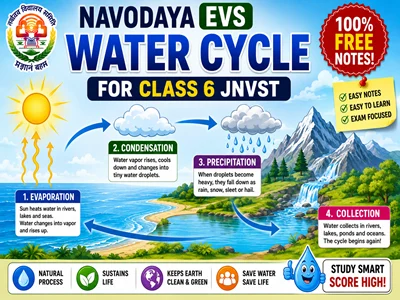
- पृथ्वी पर पानी एक बड़े चक्र में लगातार घूमता रहता है, इसे जल चक्र (Water Cycle) कहते हैं — Water keeps moving in a big circle called the Water Cycle.
- जल चक्र के 4 मुख्य चरण हैं — Evaporation, Condensation, Precipitation, Collection — The Water Cycle has 4 main steps.
- जल चक्र मुख्य रूप से सूर्य की गर्मी से चलता है — Powered mainly by heat from the Sun.
- इस चक्र का न कोई आरंभ है, न कोई अंत — यह हमेशा चलता रहता है — It has no beginning and no end, it repeats forever.
☀️ वाष्पीकरण — Evaporation
- सूर्य महासागरों, नदियों, झीलों के पानी को गर्म करता है — The Sun heats water in oceans, rivers, and lakes.
- गर्मी से पानी जल वाष्प (गैस) में बदल जाता है और हवा में ऊपर उठता है — Water changes into water vapour (gas) and rises into the air.
- तरल पानी का गैस में बदलना ही वाष्पीकरण कहलाता है — Liquid water turning into gas due to heat is called Evaporation.
- धूप में गीले कपड़े जल्दी सूखते हैं क्योंकि गर्मी वाष्पीकरण को तेज करती है — Wet clothes dry faster in sunlight because heat speeds up evaporation.
- पौधे भी वाष्पोत्सर्जन (Transpiration) से हवा में जल वाष्प छोड़ते हैं — Plants also release water vapour through Transpiration.
☁️ संघनन — Condensation
- जल वाष्प आसमान में ऊपर जाकर ठंडा हो जाता है — Water vapour rises and cools down high in the sky.
- ठंडा होने पर यह पानी की छोटी-छोटी बूंदों में बदल जाता है और बादल बनाता है — It turns into tiny water droplets and forms clouds.
- गैस का पानी की बूंदों में बदलना ही संघनन कहलाता है — Vapour cooling into tiny droplets is called Condensation.
- ठंडी पानी की बोतल के बाहर बूंदें बनना भी संघनन का उदाहरण है — Water droplets forming on a cold water bottle is an everyday example of Condensation.
🌧️ वर्षण — Precipitation
- जब बादल पानी से भारी हो जाते हैं, तो पानी धरती पर गिरता है — When clouds become heavy with water, it falls back to Earth.
- यह पानी वर्षा, बर्फ (Snow) या ओलों (Hail) के रूप में गिरता है — Falls as rain, snow, or hail.
- बादलों से पानी गिरने की प्रक्रिया को वर्षण कहते हैं — This falling process is called Precipitation.
- ठंडी जगहों (जैसे पहाड़ों की चोटियों) पर वर्षण बर्फ के रूप में गिरता है — In cold places like mountain peaks, precipitation falls as snow.
- भारत में सबसे ज़्यादा वर्षा मानसून के मौसम में होती है — In India, most rain falls during the Monsoon season.
🌊 संग्रहण — Collection
- गिरा हुआ पानी नदियों, झीलों, महासागरों में इकट्ठा होता है — Fallen water collects in rivers, lakes, and oceans.
- कुछ पानी जमीन के नीचे जाकर भूजल (Groundwater) बनता है — Some water goes underground and becomes Groundwater.
- पानी के एक जगह इकट्ठा होने को ही संग्रहण कहते हैं — This gathering of water is called Collection, the last step of the cycle.
- इसके बाद सूर्य फिर से पानी को गर्म करता है और पूरा चक्र दोबारा शुरू होता है — Then the Sun heats the water again, and the whole cycle repeats!
📖 अन्य महत्वपूर्ण शब्द — Extra Important Terms
- अपवाह (Runoff) — बारिश के बाद पानी का जमीन पर बहकर नदियों में जाना — Water flowing over land into rivers after rain.
- रिसाव (Infiltration) — पानी का धीरे-धीरे मिट्टी में रिसना — Water seeping slowly into the soil.
- कोहरा (Fog) — जमीन के पास बनने वाले बादल — Clouds that form close to the ground.
- ओस (Dew) — सुबह घास-पत्तियों पर बनने वाली पानी की बूंदें — Tiny water droplets on grass in the morning.
- इंद्रधनुष (Rainbow) — बारिश के बाद सूरज की रोशनी बूंदों से गुजरकर रंगीन धनुष बनाती है — Sunlight passing through raindrops splits into colours after rain.
- हिमपात-पिघलना (Snowmelt) — पहाड़ों की बर्फ पिघलकर पानी बनना — Snow on mountains melting and flowing down as water.
❤️ जल चक्र क्यों जरूरी है — Why is the Water Cycle Important?
- जल चक्र हमें बार-बार ताज़ा पानी देता है, पीने और उपयोग करने के लिए — It gives us fresh water again and again.
- पृथ्वी पर पानी की कुल मात्रा लगभग समान रहती है — यह सिर्फ जल चक्र से गुजरता रहता है — Total water on Earth stays almost the same, it just moves through the cycle.
- फिर भी हमें पानी बर्बाद नहीं करना चाहिए, क्योंकि साफ पानी फिर से उपलब्ध होने में समय लगता है — We must still not waste water — clean fresh water takes time to become available again.
- नदियों और झीलों को साफ रखना ज़रूरी है क्योंकि यह पानी लोगों व जानवरों के काम आता है — Keeping rivers and lakes clean is important.
⚡ Navodaya EVS Water Cycle — Quick Facts Strip
📌 Source & further reading (Govt. of India): Ministry of Jal Shakti — Dept. of Water Resources
🎯 Ab practice karo Navodaya EVS Water Cycle ke 100+ MCQs ke saath — bilkul FREE!
📝 Free Mock Test 📄 Previous Year Papers🔗 Navodaya Class 6 — Other Important Pages
❓ Navodaya EVS Water Cycle — FAQs
Navodaya Class 6 EVS mein Water Cycle topic se kitne questions aate hain?
Navodaya Class 6 EVS ke The Natural World section mein Water Cycle se aksar 1-2 direct questions poochhe jaate hain, isliye Navodaya EVS Water Cycle notes achhi tarah yaad karna zaroori hai.
Water Cycle ke 4 mukhya steps kaunse hain?
Water Cycle ke 4 mukhya steps hain — Evaporation (वाष्पीकरण), Condensation (संघनन), Precipitation (वर्षण) aur Collection (संग्रहण) — yeh sahi order hai jo aksar JNVST Water Cycle Questions mein poocha jaata hai.
Water Cycle ko kaun shakti deta hai?
Water Cycle mukhya roop se Sun (Surya) ki garmi se chalta hai, jo paani ko vaashp mein badalti hai aur poora chakra shuru karti hai.
Navodaya EVS Practice Set 2027 kahan se milega?
Iss page ke upar diye gaye “Free Mock Test” aur “Previous Year Papers” buttons se aap Navodaya EVS Practice Set 2027 aur JNV Class 6 The Natural World Questions free mein practice kar sakte hain.
📅 Last Updated: 10 August 2026 | JNV Classes — jnvclasses.com